To move a pool table, first check whether it has a slate bed. Slate tables usually need a table technician to dismantle them and re-level them at the new home. Measure every doorway and stair. Line up enough people to lift each slate piece. Wrap and label every part, then book a covered vehicle with tie-down points.
Check whether your pool table has a slate bed before you book anything
The playing surface shapes every other decision about the move. A slate bed is a stone playing surface under the cloth. It is usually made in several pieces that are bolted to the timber frame and joined so the table plays flat.
Other tables use a bed of MDF (medium-density fibreboard, a compressed timber board) or a similar board. These are much lighter. Once the legs come off, a smaller board table can sometimes move in one piece, as long as it fits through the doors.
If you have been in your home a while, you may not know which kind you own. The Australian Bureau of Statistics found that just over half (53.1%) of Australia's population lived at the same address in the five years prior to the 2021 Census. A table that came with the house, or arrived years ago, may have no paperwork at all.
A few quick checks will usually tell you:
- Look under the table at the edge of the bed. Slate shows as a layer of grey stone, often with a timber strip fixed to its underside.
- Tap the playing surface through the cloth. Slate sounds solid and dull, while a board can sound hollower.
- Look for a maker's plate or label under the frame and search the model, or ask the person who sold it to you.
- Still unsure? Send photos of the underside to a table technician and ask.
Once you know, the plan divides in two. Slate means booking a technician, finding several lifters for each piece and planning the day carefully. A board table may only need careful hands and a vehicle long enough to carry it.
Measure the route out of one home and into the next
Walk the whole route at both homes with a tape measure before move day. At the old home, that runs from the games room to the kerb. At the new home, it runs from the kerb to the exact spot where the table will stand.
- Doorways: width and height, including security screens and flyscreen doors.
- Hallways: width, and the tightest turn into each room.
- Stairs: width, headroom at each landing, and any turn that would force you to tilt a piece.
- Side paths and gates: width, plus any step or slope where a trolley will struggle.
- The parts themselves: the length and width of the largest slate piece, and the frame if it will move whole.
Slate travels on its edge, so the piece's width becomes its height as you carry it through a doorway. Compare both dimensions with every opening, not just the floor-level width.
The Australian Bureau of Statistics counted flats or apartments as 14.2% of occupied private dwellings in the 2021 Census. If either home is an apartment, contact the building manager early. Book the lift, ask for its weight limit, internal height and door width, and reserve the loading dock or a visitor bay for the vehicle.
In the same 2021 Census, semi-detached, row or terrace houses and townhouses made up 12.6% of occupied private dwellings. These homes can have narrow internal stairs with a tight turn at the top, so measure each turn as well as each step.
Two final checks. Lay floor protection along hallways and stairs, and pad door frames at corners. Then confirm where the vehicle can stop at each end. For a Brunswick terrace with no driveway, that may mean asking your local council whether you need a parking permit.
Split the move between a table technician, your lifters and the vehicle
A slate table move is really three jobs. Each one goes more smoothly when someone clearly owns it.
| Job | Who usually handles it | What to confirm before move day |
|---|---|---|
| Dismantling the cloth, rails, pockets and slate | A table technician | They will do both ends of the move, and whether the cloth can be refitted |
| Lifting and carrying each piece | You and your helpers, or helpers the technician brings | How many people will be there, and who takes the stairs |
| Transport across town | A vehicle and driver | Covered load space, tie-down points, room for slate on its edge |
| Rebuilding and re-levelling | The same technician, ideally | Same-day rebuild or a later date, and any follow-up level check |
Re-levelling means adjusting the slate with thin packers (shims) under the bed until the surface is flat and the joins between pieces are smooth. Getting this right takes the right tools and experience, which is why most slate moves start with a technician.
Before you book any transport, work through this checklist:
- Slate or board bed confirmed.
- Route measured at both homes, including any lift.
- Technician booked for both the dismantle and the rebuild.
- Enough lifters confirmed, or the technician's helpers arranged.
- Lift, loading dock and parking booked at each building.
- Vehicle booked last, timed to fit the technician's visit.
Some technicians bring their own helpers, so ask when you book. It can change how many friends you need on the day.
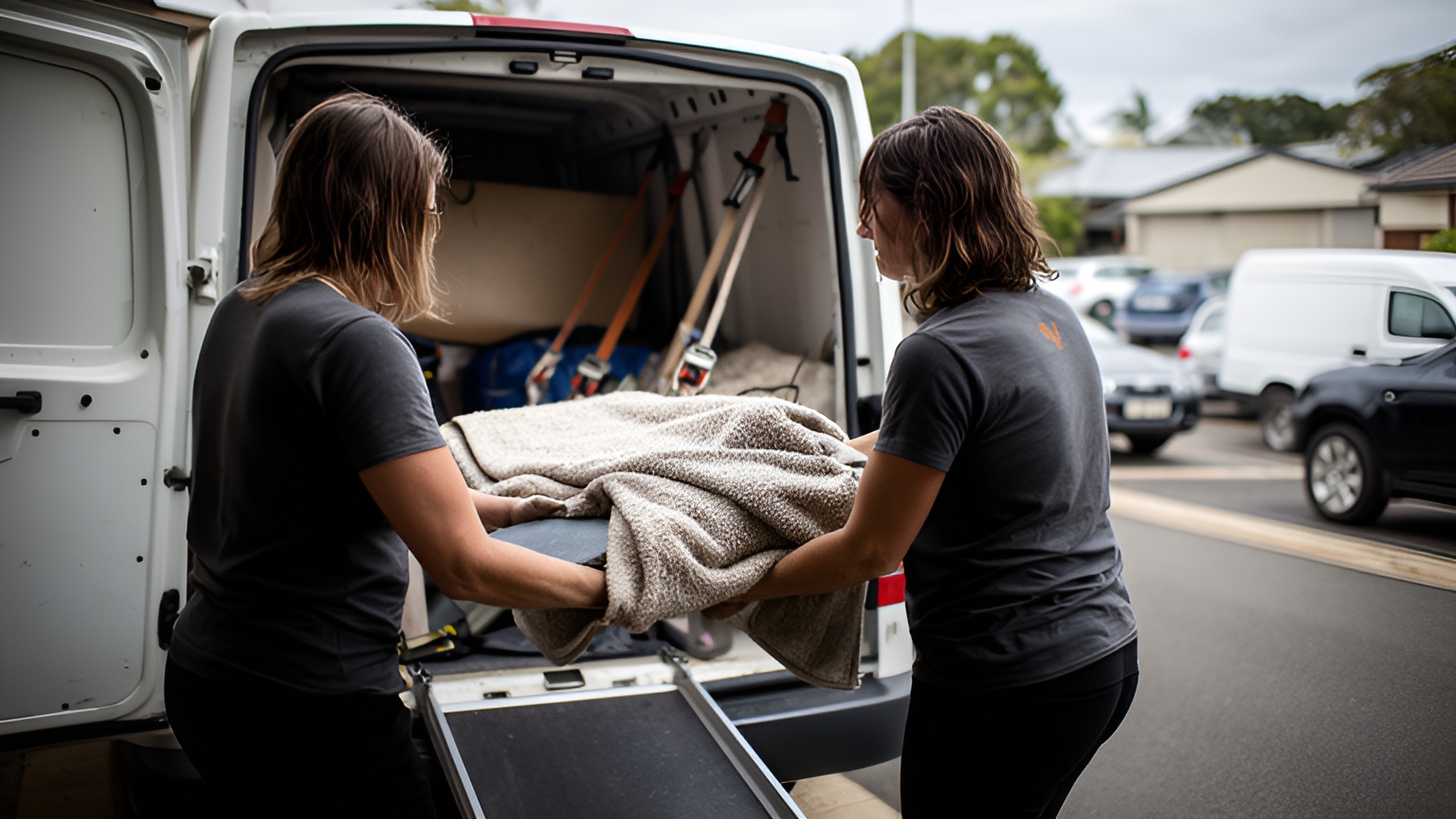
Lift each slate piece safely with enough people
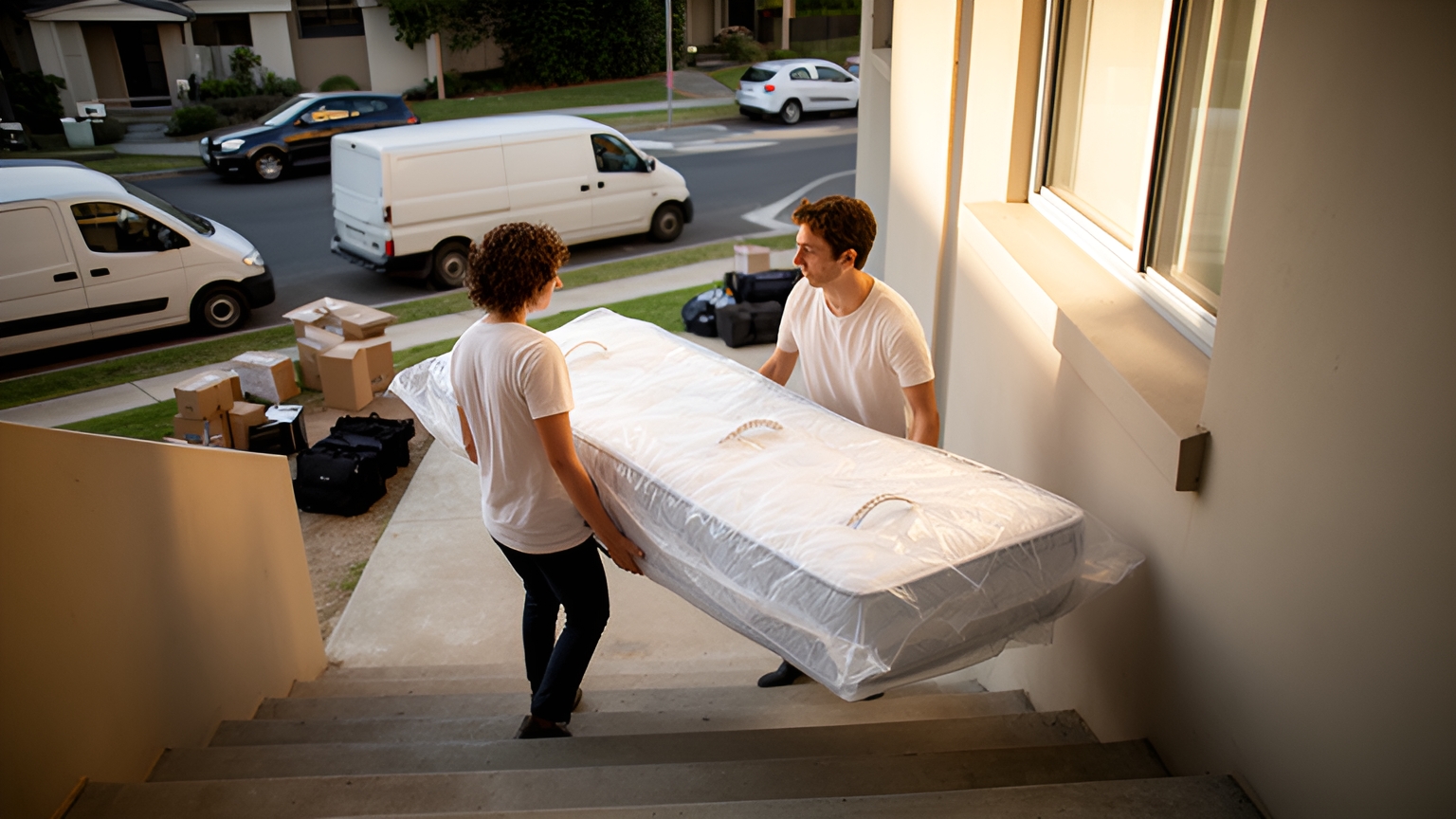
Slate is dense, brittle stone. Aim for a slow, level carry with no drops, twists or rushed corners. Treat each piece as a job for several people, with someone on every corner and one extra person to open doors and call out steps.
Safe Work Australia's key work health and safety statistics name body stressing as the leading mechanism of serious workers' compensation claims. Those are workplace claims, not household moves. Even so, a heavy, awkward load like slate is the kind of lift to plan rather than improvise, and Safe Work Australia's guidance on hazardous manual tasks is a useful reference.
- Wear closed shoes and grippy gloves, and clear rugs, toys and pot plants from the route first.
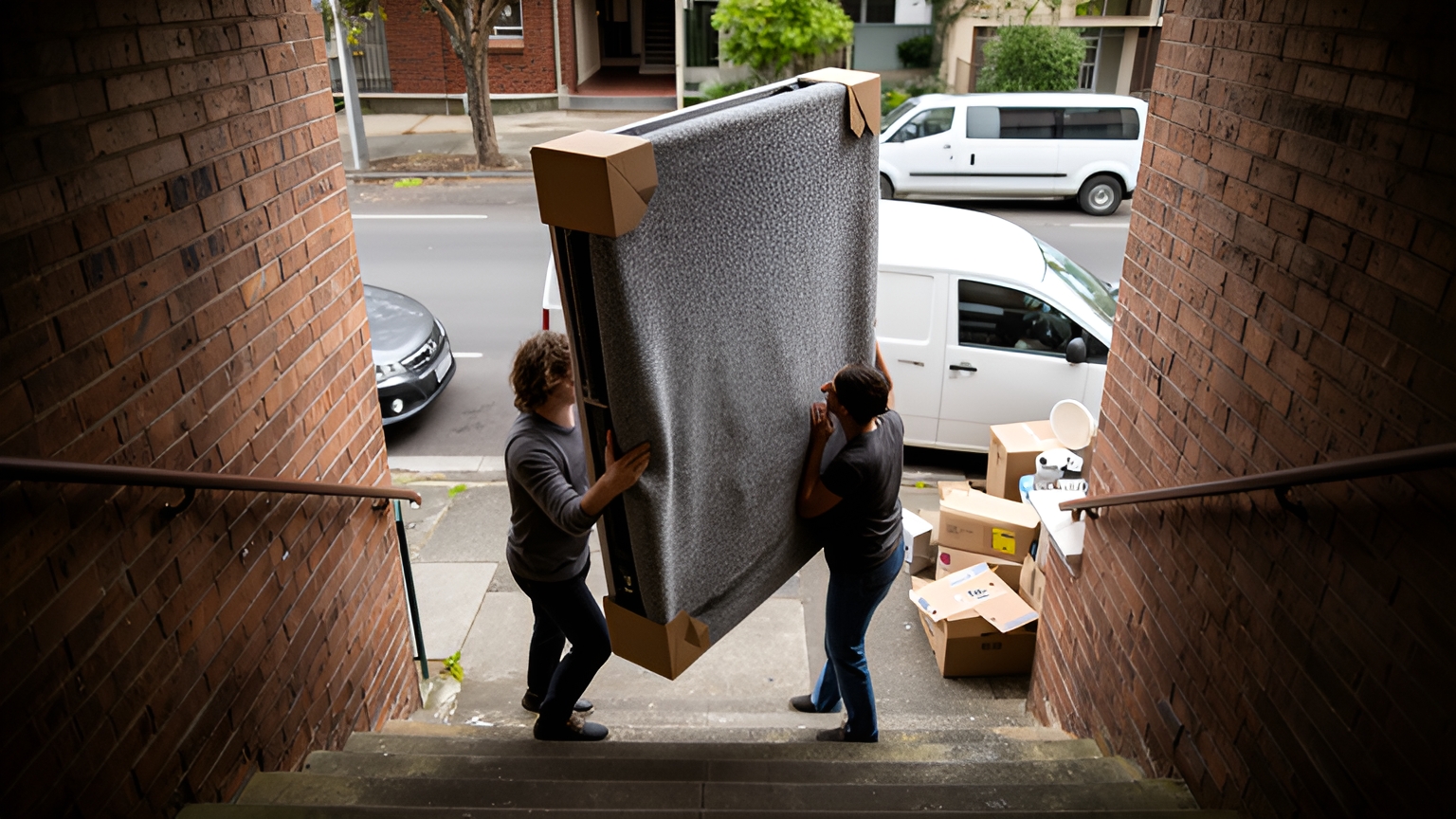
- Carry slate on its edge, never flat. A long piece carried flat can flex in the middle and crack.
- Agree a count before every lift and set-down, and have one person call it.
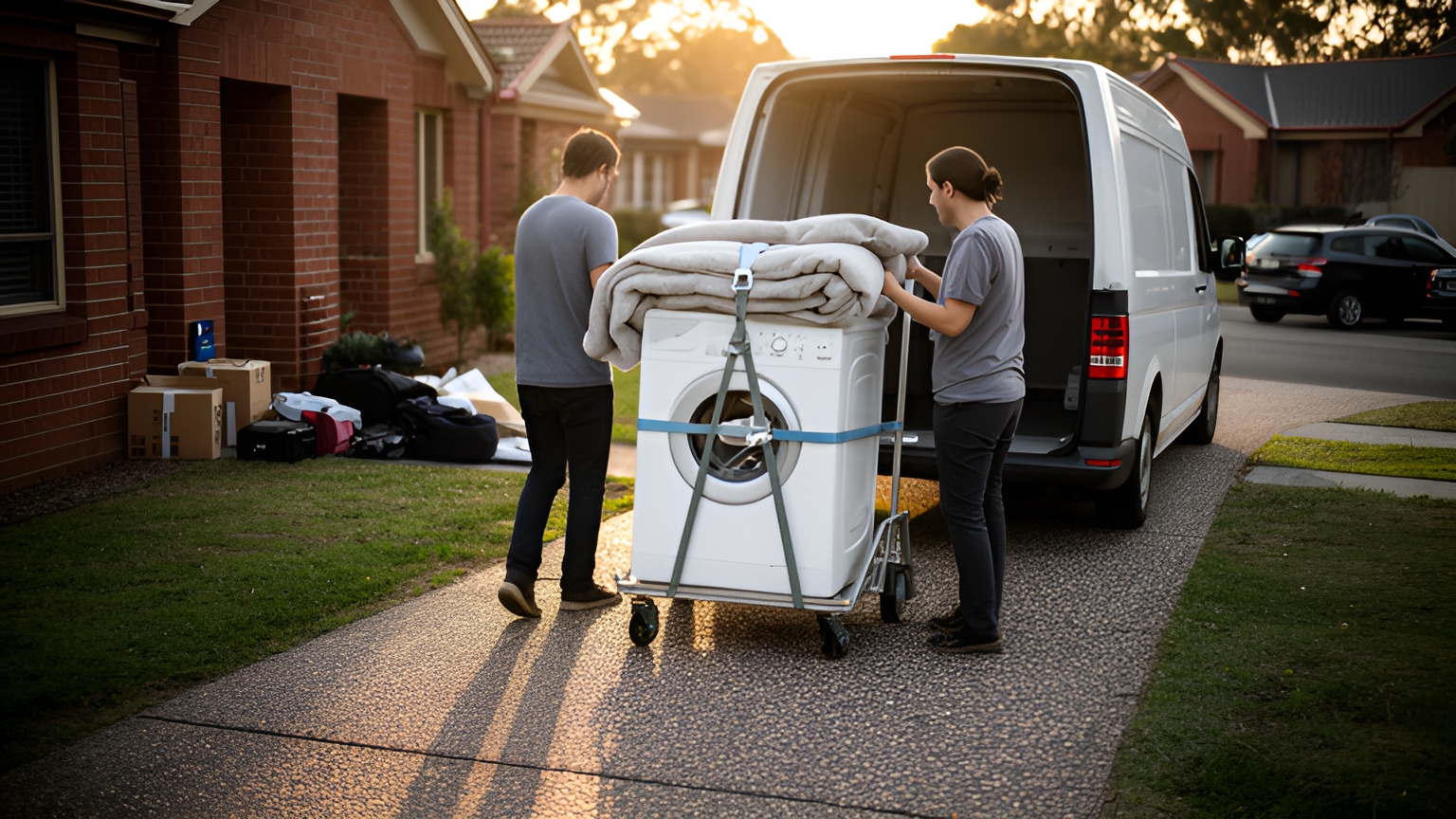
- Use a padded furniture trolley on long, level stretches, with the piece strapped to it.
- On stairs, take one step at a time and rest at each landing.
- Swap people out as soon as anyone tires, so nobody takes the strain alone.
If a fridge is going on the same day, plan that lift with the same team. This guide to moving a fridge safely covers that job.
Wrap, label and strap every part for the trip across town
Small parts are the easiest to mislay, so photograph the table from every side before the technician starts. Take close-ups of the pockets, the rails and how the cloth is attached. Those photos make the rebuild quicker.
- Bolts and fittings: bag the rail bolts for each side separately and label each bag head, foot, left or right.
- Slate pieces: label each one with its position and which way is up, on tape stuck to the wrapping.
- Legs and rails: wrap them in moving blankets, then plastic wrap to hold the blankets in place.
- Slate wrapping: blankets first, then plastic wrap, keeping a firm, padded edge to stand each piece on.
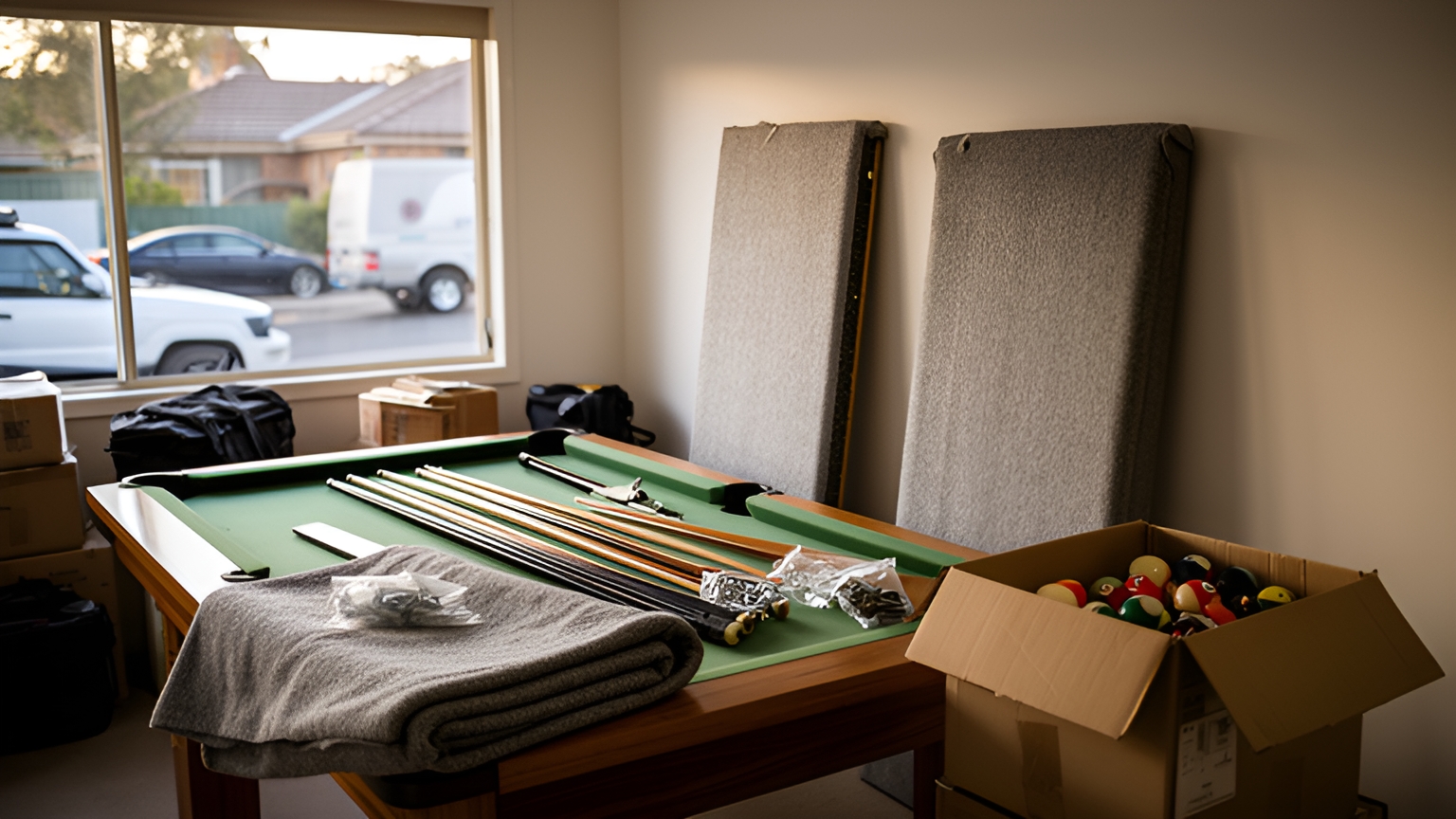
- Cues and balls: pack cues, balls, chalk, the triangle and the brush in one clearly marked box. Carry it in your own car so it cannot go missing among the moving boxes.
In the vehicle, slate goes in first. Stand each piece on its edge against the front wall of the load space, with a blanket between pieces. Secure the pieces with ratchet straps (straps you tighten with a lever buckle) hooked to the tie-down points, which are the metal rings or rails fixed inside the load area.
Load the frame and legs after the slate, with nothing heavy leaning on it. A covered van is the better choice for slate. On an open tray ute, the whole load needs a tarp tied down tightly.
If the games-room TV is coming too, give it its own packing plan, using this guide to transporting a TV safely.
In the Top End, the Bureau of Meteorology's climate averages for Darwin Airport show mean January rainfall of 432.1 mm, against 1.0 mm in July. For a wet-season move, load under a carport or garage roof and keep the cloth and timber wrapped until they are indoors.
Plan the day so pickup fits the technician's dismantle and rebuild
The technician's availability sets the timetable. Book them first, for both the dismantle and the rebuild, then fit the lifters, building bookings and vehicle around those times.
Here is a typical order for a move from a Brunswick house to a Frankston home, or a Paddington cottage to a Springfield townhouse:
- The technician arrives at the old home and removes the cloth, rails, pockets and slate. You photograph and label each part as it comes off.
- Wrapping finishes and every piece sits near the door, with the cue and ball box set aside.
- Lifters carry the slate out, and it goes into the vehicle first.
- Someone travels ahead to the new home to open up, check the lift booking and clear the route.
- Each piece goes straight to the marked spot in the new room.
- The technician reassembles the table, refits or replaces the cloth, and re-levels it.
If the rebuild falls on a later day, store the slate pieces on their edge against an inside wall. Stand them on blankets or timber battens, away from wet floors, children and pets. Lay the rails and legs flat in a dry room.
Moving on a Saturday, Sunday or state public holiday? Confirm the technician works that day, and check whether either building limits moving hours.
Before the technician arrives at the new home, check that the floor where the table will stand is solid and close to level. Raise any concerns about the floor with the technician before the slate goes down, not after.
Booking a dedicated van for your pool table through Zoom2u
Once the technician is booked and the pieces are ready, the transport is a single, direct trip across town. Zoom2u connects you with independent drivers for this kind of job, and the platform offers a few ways to book it.
- Heavy item delivery covers furniture on tailgate trucks with live tracking. A tailgate truck has a powered platform at the back that raises heavy items from the ground to the tray, so nobody has to lift slate up to tray height.
- White-glove delivery lists two-person teams and careful handling for high-value and fragile pieces that need extra care.
- With a VIP booking, the independent driver who accepts the job collects every piece and takes it straight to the new home, with no other stops.
Time the pickup for after the technician has dismantled, wrapped and labelled the table, so the driver arrives to a load that is ready to go. When you book through Zoom2u, describe the load in the job details: the number of slate pieces, that they travel on their edge, and that you need cover and tie-down points. Then confirm with the driver who accepts the job that the vehicle suits the load.
For a move within Melbourne, such as Brunswick to Frankston, see the Melbourne courier service page. For a cross-town move in Brisbane, such as Paddington to Springfield, start with the Brisbane courier service page.
Frequently asked questions
Will the felt need replacing after a pool table move?
Not always. On a slate table, the felt is usually glued or stapled to the slate and comes off during dismantling, so whether it can be refitted depends on its condition and how it was attached. Ask the technician to inspect it before move day, so a new cloth can be ready for the rebuild if needed.
Can slate pieces fit in an apartment lift?
Often, but check first. Ask the building manager for the lift's weight limit, its internal height and door width, and whether protective lift padding can be fitted for your booking. Slate pieces travel on their edge, so measure the lift's height and diagonal, not just its floor.
Where should a pool table go in the new home?
Choose a level, solid floor with room on every side to play a full cue stroke. Keep it away from direct sun, heaters and damp walls, which can affect the cloth and timber. Mark the spot with tape before the technician arrives, so the pieces go straight to the right place.
How soon can you play on a pool table after moving it?
The table is ready to use once the technician has reassembled and re-levelled it. A new floor and the frame can settle, so some technicians suggest checking the level again after a few weeks. Ask whether a follow-up check is included.
This article was drafted with AI assistance and checked by automated editorial, fact and legal review before publishing. Photographs are AI-generated.