To move a fridge, switch it off and empty it 24 hours ahead so it defrosts, wipe it dry, tape the doors and shelves, then move it upright on an appliance trolley with two people. Measure every doorway first, and let it stand at the new home before switching it back on, as your manual advises.
Your fridge-moving countdown, from switch-off the day before to cold again
Most of the work in a fridge move happens the day before. If the preparation is done, move day is mostly careful lifting and a short drive.
- A few days out: start eating the fridge down and stop buying fresh food. Put gel packs or ice bricks in the freezer so they are frozen hard by switch-off. Find the manual, or the model number on the label inside the fridge, and check how long the fridge should stand before you switch it back on and how to remove the doors if a doorway turns out to be tight.
- The day before: CHOICE, the independent consumer organisation, advises switching a fridge or freezer off 24 hours before moving it into your new home. That gives the evaporator, the cold panel or coil that builds up frost, time to defrost. If the fridge is going into storage instead, CHOICE suggests switching it off a week ahead.
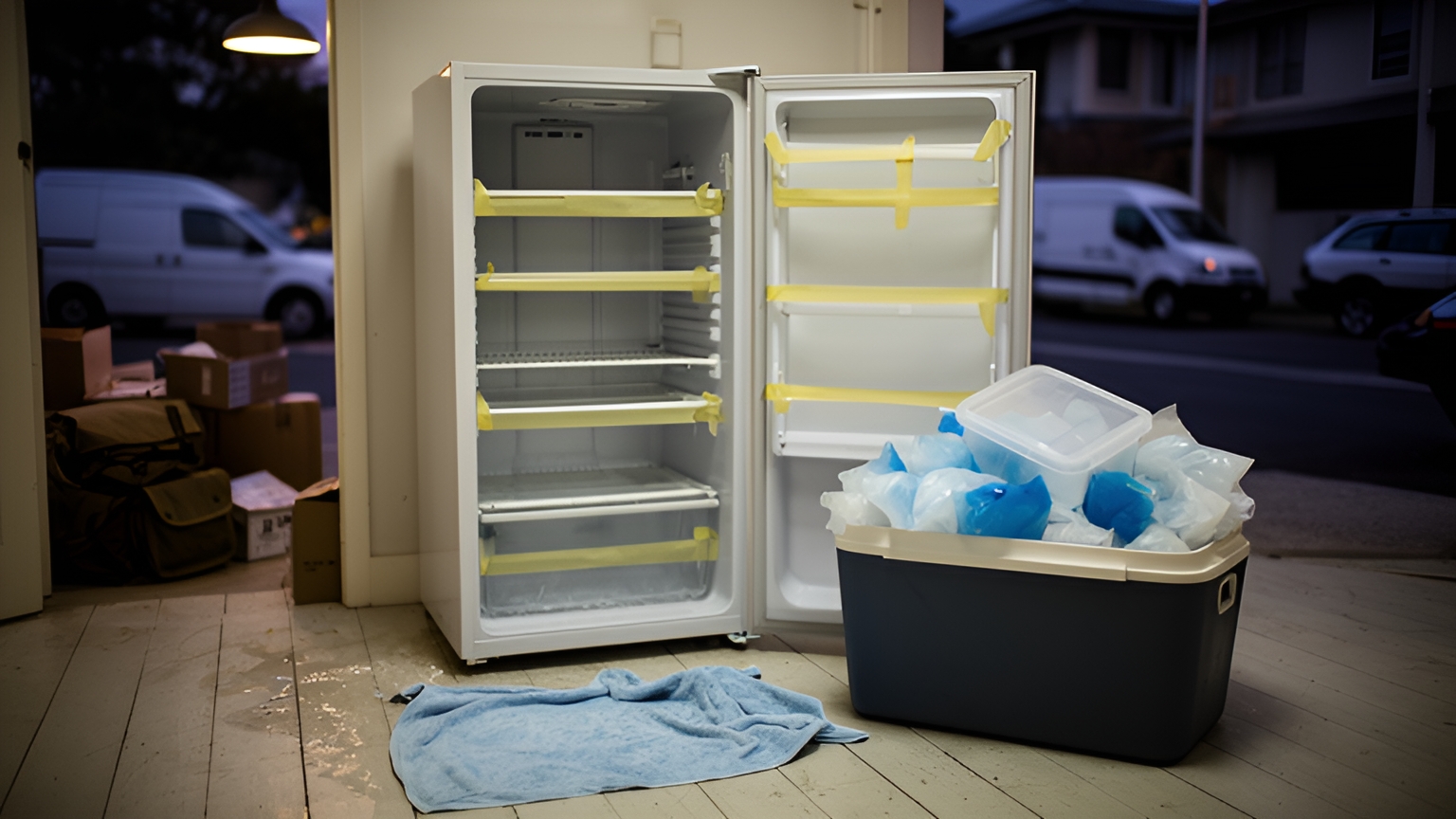
- At switch-off: turn it off at the wall, move the food straight into an esky, take out loose shelves and drawers, and leave the doors open with towels on the floor in front.
- The evening before: empty the drip tray, wipe the inside completely dry and let it air. Wrap glass shelves in towels. Tape the doors shut and any fixed shelves in place with low-residue tape, such as painter's tape, and tape the power cord to the back.
- Move morning: check the forecast, clear the path, lay floor protection and photograph both homes. Wipe the outside of the fridge dry where hands and straps will go.
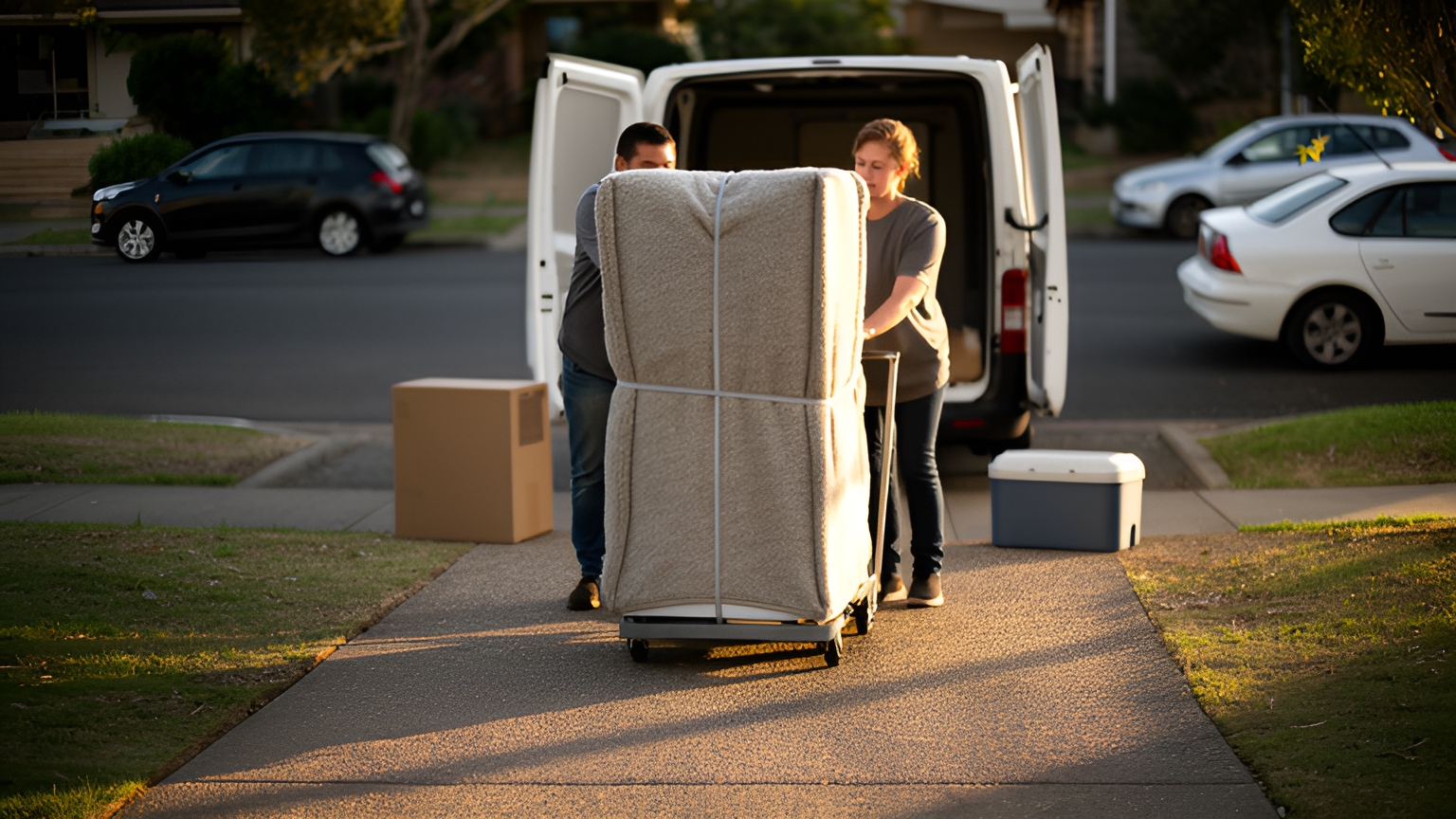
- Loading and the drive: the fridge goes onto the trolley upright, is strapped on, and travels standing up, strapped to anchor points in the vehicle.
- At the new home: wheel it into place, leave the ventilation gap your manual gives, and let it stand for the time the manual sets before you plug it in.
- Cold again: switch on, close the doors and wait until it is properly cold before restocking. A simple fridge thermometer takes the guesswork out.
As a worked example, if the move is booked for Saturday morning, the fridge goes off on Friday morning, the shelves come out and the inside is dried on Friday evening, and the esky is packed on Friday morning, not Saturday.
Bag and label the shelf brackets and any screws from removing the doors, then tape the bag to the back of the fridge, the same habit that helps when preparing an item for delivery with a courier.
How to keep food cold while the fridge is switched off
Two clocks start at switch-off. The defrost clock is the time the fridge needs to thaw. The food clock is how long your food can sit without proper cooling, and it starts at the same moment, not on move day.
The Food Safety Information Council's advice for a power cut is a useful guide: food in a fridge that has lost power stays safe for 2 hours, should be used straight away if it has been between 2 and 4 hours, and should be thrown out after 4 hours. So move food into the esky the moment the fridge goes off, rather than leaving it inside while you pack.
The council also says a full freezer can keep food chilled for up to 48 hours if the door is kept shut. A defrost needs the door open, so that figure does not carry over to a move. Plan to empty the freezer as well.
A simple esky plan keeps what is left cold until the fridge is running again:
- Eat down over the last few days so only one esky's worth of food remains.
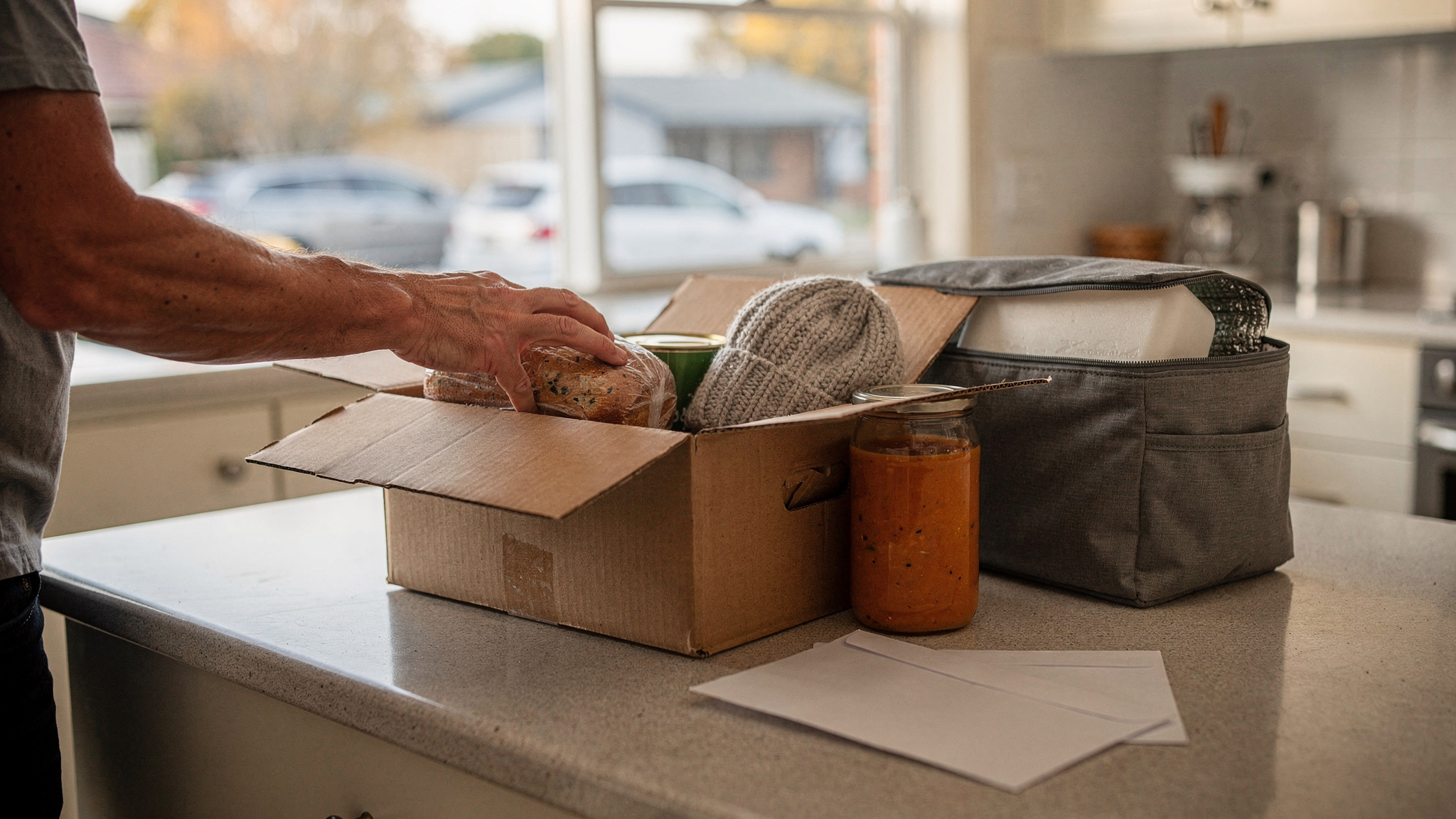
- Pack it with frozen gel packs or ice bricks, which the Food Safety Information Council recommends keeping on hand for an esky. Put the coldest items at the bottom and layer the packs through.
- Keep the esky in the coolest room, out of the sun, and open it as little as possible.
- Top it up with fresh ice as the packs soften, and share or use up anything you cannot keep cold.
- Carry the esky in your own car, last out of the old home and first into the new one.
Heat asks more of an esky, and of the people doing the lifting. The Bureau of Meteorology rated 2025 Australia's fourth-warmest year since national records began in 1910. For a summer move, check the forecast for your city the day before, start in the cooler morning where you can, and keep the esky in the air-conditioned cabin rather than a hot boot.
Measuring doorways, stairs, lifts, the vehicle and the new cavity
Measure the fridge first: height, width and depth, with the door handles included. Then measure every tight spot on the way out of the old home and into the new one, and allow room for the trolley and your hands.
Stairs, lifts and narrow halls are common on this route. Of private dwellings counted at the 2021 Census, the Australian Bureau of Statistics found 13 per cent were townhouses and 16 per cent were apartments. If either home is one of them, measure the stairwell or lift and book the lift early.
| Spot | What to measure | What to do if it is tight |
|---|---|---|
| Doorways | The clear opening with the door fully open | Remove the fridge doors as the manual shows, or lift the room door off its hinges and refit it the same day |
| Hall corners and stair landings | The turning space, measured diagonally across the corner | Plan the turn before lifting, because a fridge on a trolley needs more room than it looks |
| Stairs | Step width, the turns at top and bottom, any low ceiling | Agree who handles the trolley and who guides before you start |
| Lift | Inside height and depth, and the door opening | Book the lift with building management at both ends for the same window |
| Vehicle | Load space height and length, and the rear opening | Give these measurements when you book so the fridge can ride standing up |
| New cavity | Height, width and depth, plus the ventilation gap in the manual | Check there is a power point within reach of the cord, and a water connection if the fridge needs one |
Keep all the measurements in one note on your phone. You will need them for the booking, the lift and whoever is receiving the fridge at the new home.
Keeping the fridge upright: tilt, trolleys, straps and the hinge-side-up rule
Fridges are built to stand. The refrigerant, the cooling fluid sealed in the pipes at the back, needs to stay where it should, and CHOICE advises keeping a fridge as upright as possible on a trolley for that reason.
CHOICE puts the trolley limit plainly: "When carrying a fridge or freezer on a trolley, try not to tip it back more than 45 degrees." Use an upright appliance trolley with its own strap rather than a flat furniture dolly.
- Slide the trolley's base plate under the side or back of the fridge, never the door side, so nothing presses on the doors.
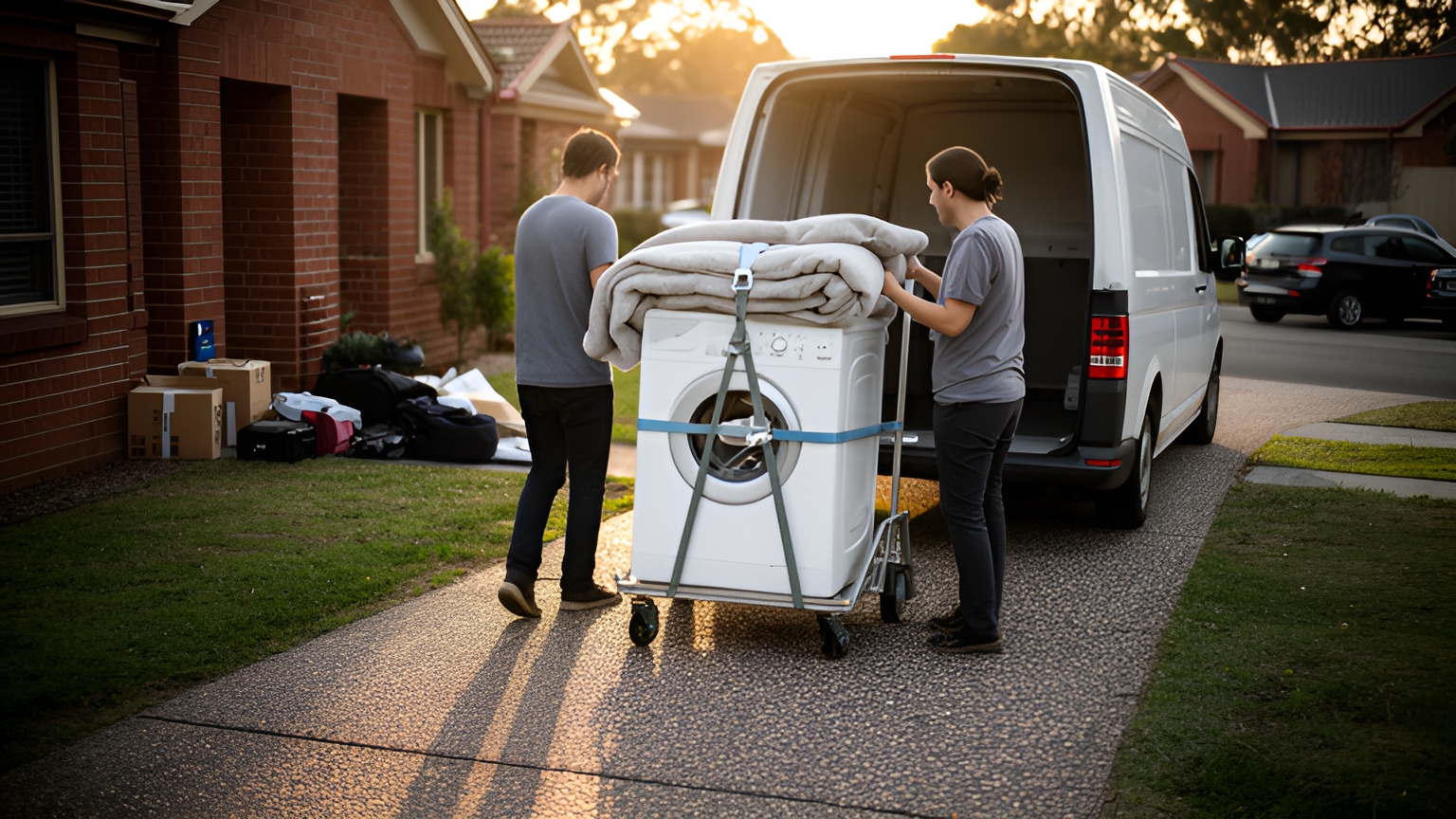
- Wrap a moving blanket around the fridge, then strap over the blanket. The strap grips better and the finish stays unmarked.
- Tighten the strap, roll forward a few steps, then check it again.
- Tilt back only as far as it takes to roll, and stand the fridge upright whenever you stop.
- In the vehicle, stand it against a wall of the load space and strap it to anchor points high and low so it cannot slide or tip.
If the fridge truly has to go on its side, for example to clear a low ceiling, CHOICE's advice is to lay it hinge-side up. It will then need to stand for a while before it is switched back on, so check the manual and allow extra time compared with a fridge that stayed upright.
Lifting and carrying a fridge safely with two people
A fridge is heavy, tall and top-heavy, with nowhere obvious to hold it. Safe Work Australia lists sprains and strains, back injuries, and joint and bone injuries among the harms that lifting, pushing and pulling can cause, and notes injuries can happen suddenly when "handling a load that shifts position."
A fridge with damp sides or a door that swings open is exactly that kind of load. These habits keep it steady:
- Agree roles first. One person handles the trolley and controls the tilt. The other steadies the fridge from the side and watches the path ahead.
- Hands flat, not hooked. On a fridge with no handles, the helper steadies it with flat palms on the side panel, never fingers under a taped door edge.
- Uphill on stairs. The trolley handler stays on the higher step, going up and coming down, and takes the stairs one step at a time. The helper stays to the side and slightly below, guiding rather than taking the weight.
- Short calls. Agree simple words for ready, step and stop before you lift.
- Dry sides, firm strap. If the strap starts to slip on a damp panel, stop, stand the fridge upright, dry it and re-strap.
- Step clear if it tips. A dented panel is far easier to fix than a back, so let a tipping fridge go rather than trying to catch it.
Wear closed shoes with good grip, lift rugs out of the path, and keep children and pets in another room. On a hot day, build in water breaks.
If the stairs are steep or narrow or turn sharply, or the fridge is a large double-door model, plan for more hands and the right equipment rather than pushing through with two.
Protecting floors, water lines and your bond at both homes
A defrosted fridge can still drip, and trolley wheels can mark floorboards and tiles. A little preparation keeps both homes in good shape.
- Tape sheets of thick cardboard or hardboard along the route, especially across floorboards, tiles and lino.
- Pad door frames and stair corners with folded blankets where the fridge turns.
- Put felt pads or a folded towel under the fridge's feet when sliding it into or out of the cavity.
- If the fridge has an ice maker or water dispenser, keep a bucket and towels at the connection point, and leave the disconnection and reconnection to a licensed plumber if you are unsure.
Renting is common among people who move. The Australian Bureau of Statistics found that between 2016 and 2021, internal movers were more likely to rent at their current usual residence than non-movers (45.2% compared to 14.7%). If you rent at either end, a few photos protect your bond:
- Photograph the floors, skirting boards and door frames along the route at both homes before you start.
- Photograph the old cavity once the fridge is out, then wipe it clean and dry before handing back the keys.
- At the new rental, check the cavity against the entry condition report and note anything already there before the fridge goes in.
- Leave a towel under the new spot for the first day and check it for drips.
Booking a heavy-item or direct courier through Zoom2u for your fridge
When you book through Zoom2u, copy the details from your countdown into the booking: the fridge's height, width and depth, the stairs or lift at each end and the lift booking time, where the vehicle can park, and whether a second person will be there to help carry. The independent driver who accepts the job can only plan for what the booking tells them.
For white goods, heavy item delivery on Zoom2u covers furniture and appliances on tailgate trucks, which are trucks with a lifting platform at the back that raises heavy items up to the tray, with live tracking.
If the fridge is the only thing moving, a VIP booking means the first available driver collects it and takes it straight to the new address with no other stops, for example between two rentals across Brisbane.
In Melbourne, a 3-hour express booking across town, say from a Brunswick apartment to a Footscray rental, comes with live GPS tracking and photo proof of delivery, where the vehicle suits the fridge's size. The Melbourne courier options list what the platform offers across the metro area.
The delivery option does not change the food plan, because the food went into the esky at switch-off. Choose by what the day needs: the vehicle that fits the fridge upright, and a pickup that lines up with your lift booking at one end and the person receiving it at the other. This guide to choosing the right same-day delivery service helps you weigh those options.
Frequently asked questions
How long should a fridge stand before you switch it back on?
It depends on the model, so check the manual. If the paper copy is gone, the model number is usually on a label inside the fridge, and the maker's manual can often be found by searching that number. A fridge that travelled on its side generally needs longer to settle than one kept upright.
Can a fridge travel in an open ute or trailer?
It can, if it stands upright and is strapped firmly to anchor points so it cannot slide or tip. CHOICE suggests covering it with a tarp when the weather looks uncertain, so check the Bureau of Meteorology forecast for your city on the morning of the move.
What should you do with a fridge that has an ice maker or water dispenser?
Turn off the water supply tap, empty the ice tray and any water reservoir, and drain the line into a bucket before disconnecting it. If the fridge is plumbed in and you are unsure how to disconnect or reconnect it, book a licensed plumber for both ends.
Should you move a fridge with food still inside?
No. Food adds weight, shifts the load as the fridge tilts and can push doors open on the way. Eat the fridge down over the last few days, pack what is left into an esky with frozen gel packs, and move the esky in your own car.
This article was drafted with AI assistance and checked by automated editorial, fact and legal review before publishing. Photographs are AI-generated.