For a same-day care package delivery, choose contents that cope with heat, pack cold items together against an ice brick, and book a direct delivery within your city for a time someone will be home. Check the forecast for the recipient's suburb, tell them when the box is coming, and save perishables for local sends.
Choosing care package contents that travel well in Australian heat
A good care package is planned around the trip as well as the person. A box that spends part of a warm afternoon in a vehicle or on a doorstep needs contents that still look and taste right when the lid comes off.
Sort everything you are thinking of sending into three groups before you shop:
- Happy in the heat: herbal tea, coffee sachets, plain crackers, nuts, dried fruit, hard lollies, firm biscuits like shortbread, lip balm, hand cream, a puzzle book, a paperback, warm socks and a soft throw.
- Needs a little care: chocolate, iced or cream-filled baking, soft cheese, candles and anything in glass. These can travel across town if they are packed well and the journey is short.
- Local and same-day only: home-cooked meals, soup, fresh fruit, dairy, flowers and anything that has to stay fridge-cold.
Then match the box to the person. A uni student in a new city might want familiar snacks, a phone charger and a note from home. A parent recovering after surgery will value soup they can heat, a pillow spray-free throw and something easy to read.
A friend who has just moved into a flat on their own may simply want a proper meal they did not have to cook. Ask a housemate or family member about allergies, special diets and medication before adding food or remedies, so every item in the box is one they can actually use.
If the care package is also marking a birthday or a milestone, browse ideas for same-day gift delivery of flowers, hampers and cake to pair with your homemade contents.
Packing cold items, fragile treats and the card in the right order
Packing materials matter, but what makes a care package arrive in good shape is the order things go in, so the cold stays with the cold and the dry stays dry.
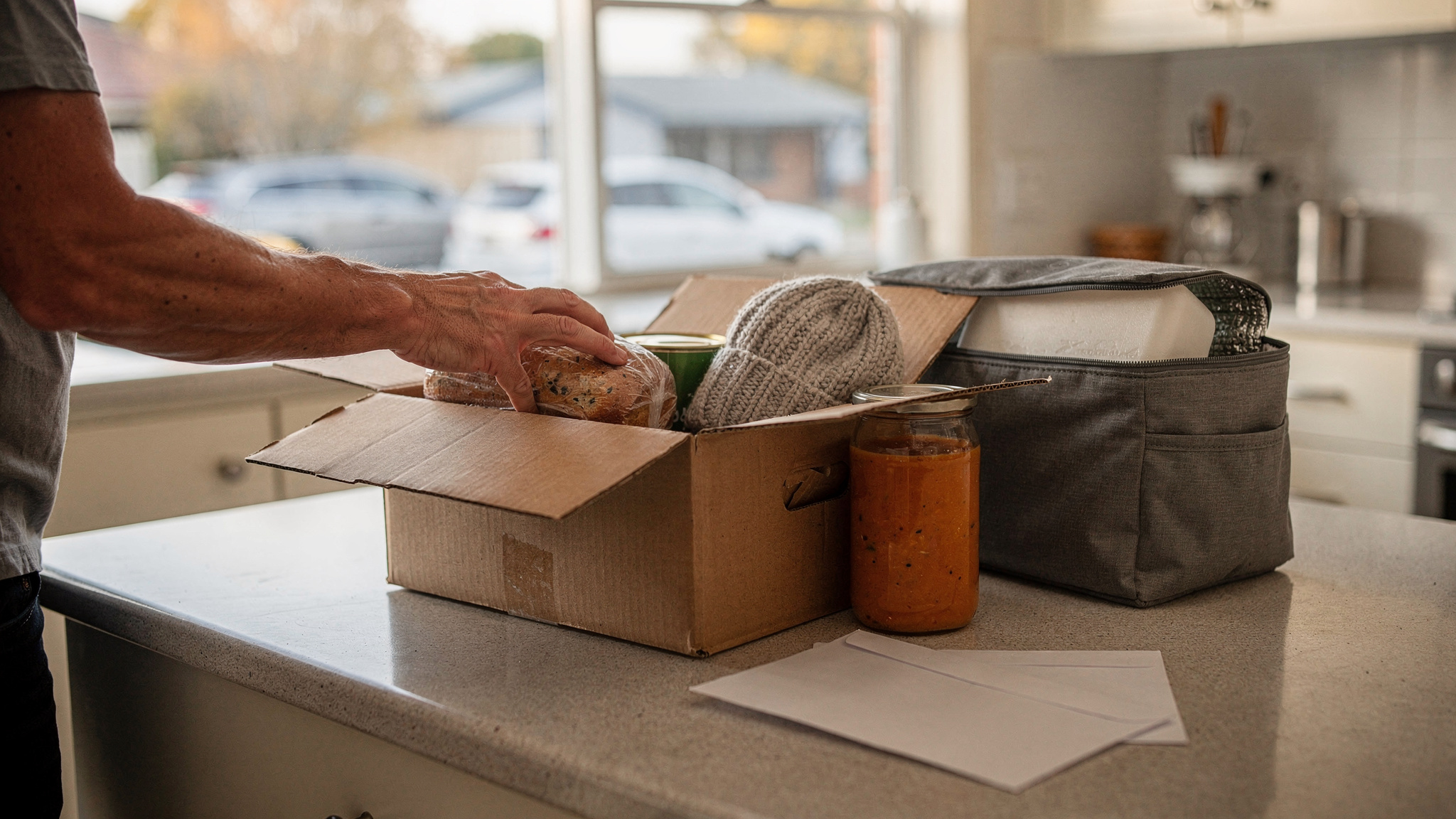
- Prepare the night before. Freeze two ice bricks and leave cooked food in the fridge until the last moment. Choose a sturdy box a little larger than you need, plus an insulated liner or cooler bag for the cold section.
- Build the cold section first. Put every chilled item together inside the liner, pressed against one ice brick, with the second brick on top if it fits. Keeping cold items in a tight group helps them hold their temperature longer than spreading them around the box.
- Seal against condensation. Use containers with tight lids, then put each one in a zip-lock bag. Any moisture from the ice stays inside the bag instead of soaking the cardboard.
- Fill the gaps. Tea towels, a rolled beanie or scrunched paper stop items sliding when the vehicle turns a corner.
- Add fragile treats above the cold section. Cupcakes, a jar of jam or a candle sit in the middle of the box, away from the walls, cushioned on every side.
- Keep the card and soft items apart. The card, books, knitted gifts and anything that hates damp go in their own sealed bag at the opposite end from the ice.
- Label the lid. Write a clear note such as Keep cold, open today and mark which way is up.
How long an ice brick keeps things cold depends on the box, the liner and the day itself, so treat packing as one half of the job. The other half is keeping the journey short and the handover quick.
For general advice on boxes, padding and sealing, this guide on how to prepare a parcel for delivery covers the basics.
Timing a care package around heatwaves and the busy pre-Christmas months
Australia's warmest stretches overlap with its busiest gifting months. In its summary of 2025, the Bureau of Meteorology reported: "Between January and March, and between October and December, large parts of Australia experienced heatwave conditions, reaching extreme severity at times."
Over the same period, the Australian Bureau of Statistics reported high household spending in October and November, when major sales and cultural events boosted spending. So a care package sent in late spring often shares the calendar with sales, end-of-year events, Christmas shopping and hot weather all at once.
Knowing what counts as a heatwave helps you read the forecast. The Bureau of Meteorology explains that "A heatwave is when both the minimum and maximum temperatures are unusually hot for 3 days or longer." Because what counts as unusually hot varies from place to place, check the forecast for the recipient's city, not your own.
Some capitals are seeing more very hot days. An ABC News analysis of capital-city summers found that, in some instances, a small amount of warming across the season amounted to four times as many individual extreme heat days. If your box is heading somewhere hot in summer, lean towards contents from the heat-happy list.
A simple timing plan:
- Look at the week ahead. If a heatwave is forecast where the recipient lives, send before it starts, or swap fresh food for shelf-stable treats.
- Send early in the day. A morning pickup keeps the box out of the hottest hours and lands it while there is still time to unpack.
- Book ahead in November and December. End-of-year events fill diaries, so lock in a day the recipient is home. The Christmas delivery planning guide for Australia helps with dates in the lead-up.
- Check weekends and public holidays. State public holidays differ, and a long weekend is often when people head away.
Arranging the handover with homes, uni residences and hospital wards
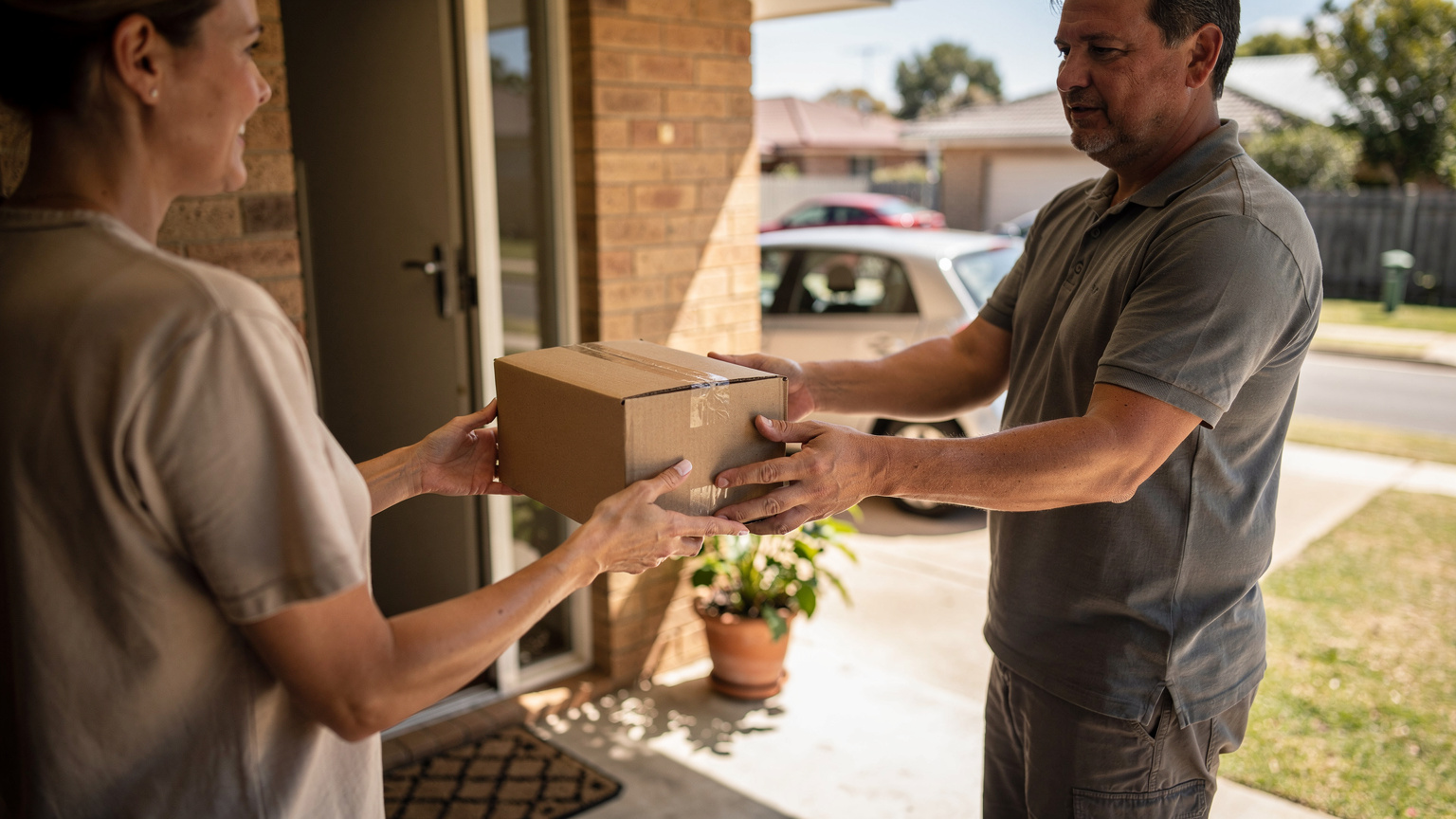
A care package does its best work when it goes straight from the driver's hands into someone else's. A few minutes of planning about where the box will land makes the biggest difference to cold food and fragile treats.
Homes and apartments
- Confirm someone will be in, or agree on a shaded, out-of-sight spot: a covered porch, behind a side gate or with a neighbour. A step that catches the afternoon sun is best avoided.
- Add the details that save time at the door: unit number, gate or intercom code, which building in a complex, and a friendly note if there is a dog.
- Text the recipient, or a housemate if it is a surprise, with the expected delivery window and where the box will be left.
Uni residences
Residences often route parcels through a reception desk or mailroom with set hours. Ask the student whether it can hold food, whether there is a fridge, and when it closes.
If perishables are going in, the simplest plan is a handover to the student in person. Include their full name, building, room number and mobile, and pick a time they are not in class.
Hospital wards
Ring the ward before you pack. Wards can have their own guidance on flowers, outside food and where deliveries should go, and staff can tell you whether to send to the ward or the main front desk.
Address the box with the patient's full name, the ward name and bed number if you know it, plus a family member's phone number. Ask which part of the day suits deliveries, so the box arrives when someone can take it in.
For more on making the handover smooth for everyone involved, read these tips on same-day delivery etiquette for senders and recipients.
Matching delivery speed and distance to what is inside the box
One decision rule covers most care packages: the more perishable the contents, the shorter and more direct the journey should be. Less time in a warm vehicle and on a doorstep means less chance of melted chocolate or soup that has lost its chill.
| What is inside | Best way to send it | Packing note |
|---|---|---|
| Home-cooked meals, soup, dairy, fresh fruit | Direct, same-day across town, timed for when someone is home | Ice bricks and liner; straight into the fridge on arrival |
| Flowers and cake | Same-day from a florist or bakery near the recipient | Upright, cushioned and out of the sun |
| Chocolate and iced baking | Same-day, and as quickly as possible on hot days | Close to the cold section but not touching the ice |
| Tea, crackers, books, socks, toiletries | Any distance, including interstate | Pad well and seal against damp |
| Something precious or one of a kind | A direct delivery with no other stops | Wrap separately and tell the recipient it is coming |
Within a city, a tighter window helps on hot days. If the box holds chilled food and the recipient is free for a set stretch of the afternoon, a three-hour delivery across town keeps the trip short and predictable.
Distance changes the plan. A box going from Hobart to Darwin, or Perth to Sydney, crosses climates and spends far longer in transit than one crossing Brisbane, so keep long-distance boxes to sealed, shelf-stable contents.
There is a neat way to send something fresh to a loved one in another city: split the package. Send the shelf-stable part, the card and the keepsakes interstate, then order the fresh element from a bakery or deli near the recipient for a same-day local delivery. Check the recipient's local time, especially across time zones and daylight saving changes, so both parts arrive when they are awake and home.
Booking a same-day care package delivery through Zoom2u
Everything above comes down to a short, direct journey and a planned handover. For a care package going across town, you can book a same-day delivery through Zoom2u, and an independent driver who accepts the job collects it, from your home or from a local florist or bakery, and takes it to the recipient.
Live GPS tracking lets you tell the recipient, or the housemate keeping a surprise, when to expect the box. Photo proof of delivery shows where it was left, so cold items go straight into the fridge.
With VIP Courier, the independent driver who accepts the job takes it straight to the destination with no other stops.
Before you book, run through this quick list:
- Contents sorted by how well they cope with heat
- Cold items grouped against the ice brick, card sealed separately
- Forecast checked for the recipient's city
- Handover arranged, with a shaded spot or a person ready to take the box
- Pickup and drop-off addresses, access codes and phone numbers ready to enter
Frequently asked questions
What should go in a care package for someone who is unwell?
Easy, low-effort comforts work best: herbal tea, plain crackers, soup they can heat, tissues, lip balm, a puzzle book and a soft pair of socks. Skip strong scents and rich food, and if they are on a special diet or medication, ask a housemate or family member what is safe before you shop.
Can a care package be ordered from a local shop and delivered the same day?
Yes. Buy from a local bakery, deli or florist near the recipient and book a same-day delivery so a driver collects from the shop and takes it straight to them. Ask the shop to have the order boxed and ready at a set time, and to keep cold items in the fridge until the driver arrives.
How do you send a surprise care package without spoiling the surprise?
Tell someone else instead of the recipient. A housemate, partner or neighbour can confirm a time they will be home, take the box in and put any cold items straight in the fridge, so the surprise holds and nothing sits outside.
Can a care package with food go interstate or overseas?
Shelf-stable, sealed food travels best over long distances, while fresh and home-cooked food is better kept for local, same-day sends. Some states restrict fresh fruit, plants and other items crossing their borders, so check the destination state's biosecurity guidance, and for anything going overseas check the Australian Border Force's guidance before you pack.
This article was drafted with AI assistance and checked by automated editorial, fact and legal review before publishing. Photographs are AI-generated.