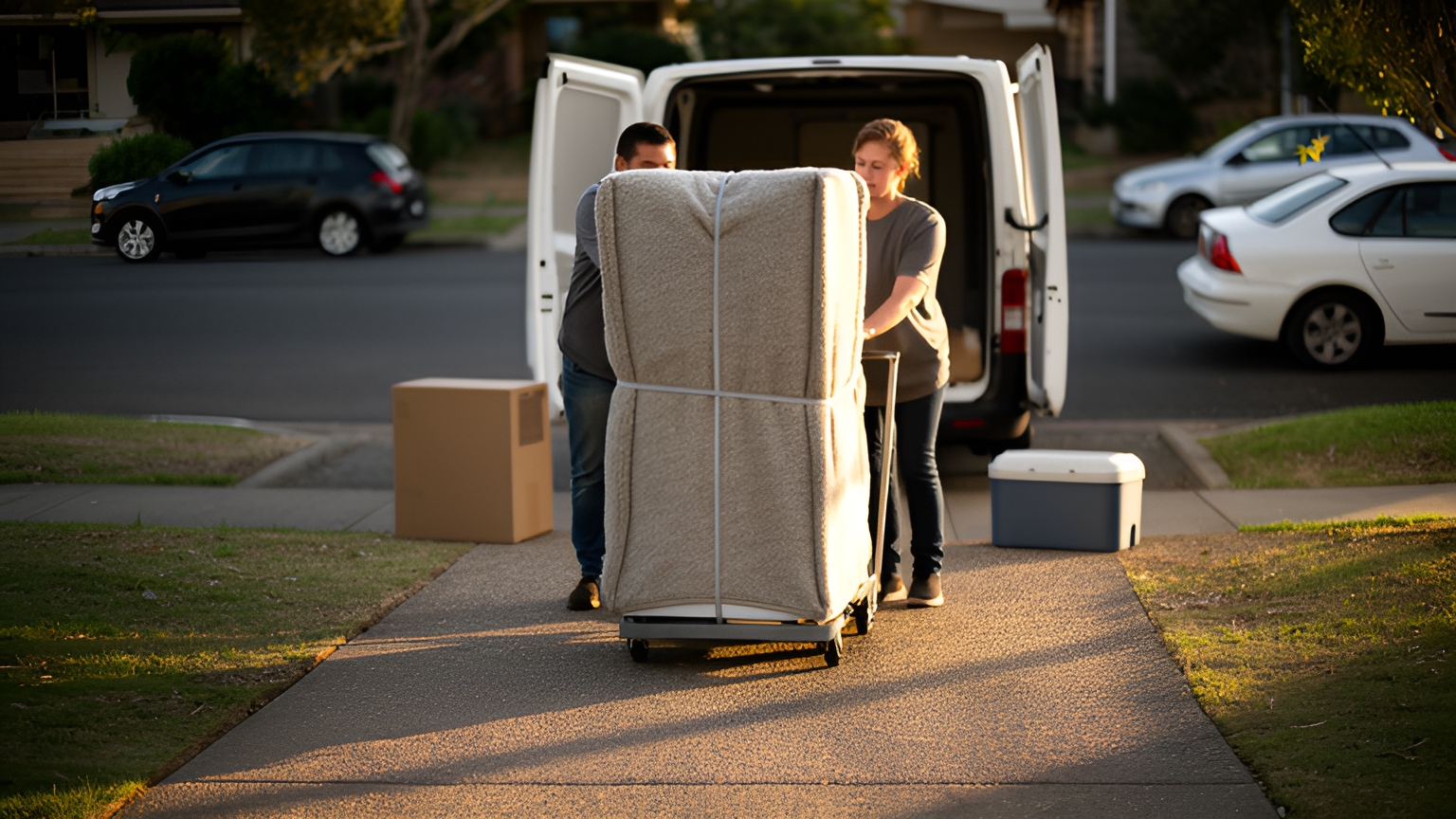
To move a washing machine, turn off the taps, unplug it, drain the hoses and drum, and fit the transit bolts from your model's manual to lock the drum. Measure every doorway and stair turn, lift with two people and a hand truck, and strap it to anchor points in the vehicle, positioned as the manual advises.
Check whose machine it is and track down the transit bolts first
Before a single hose comes off, confirm the machine is yours to take. According to the Australian Bureau of Statistics, between 2016 and 2021, internal movers were more likely to rent at their current usual residence than non-movers (45.2% compared to 14.7%).
So if you rent, start with your lease and the entry condition report. If the washer was supplied with the property, it stays, and your property manager can confirm what is included.
Next, find the transit bolts. These are long bolts that screw into the back of many machines and hold the drum still, so it cannot swing on its springs while the machine is tilted, bumped or driven. Many front loaders use them, while some top loaders lock the drum another way, so your manual has the final say.
If the bolts or the manual went missing after the last move, work through this list a week or so before moving day:
- Find the model number. It is usually printed on a label or plate at the back of the machine, around the door rim, or under the lid.
- Look up the manual. Search the model number on the brand's support pages. The manual shows how many bolts the machine takes, where they go and which tool fits them.
- Order replacement bolts early. Quote the model number so the parts match, and allow time for postage.
- Note the machine's weight. It is on the specification page of the manual. The wash capacity in kilograms on the front is how much laundry it holds, not how heavy the machine is.
Once the machine is installed at the new home, put the bolts and the spanner in a zip-lock bag and tape it to the back of the machine. Next time you move, everything is already there.
How to drain and disconnect a washing machine the night before
Draining the night before gives trapped water time to run out and the drum time to air. The machine travels lighter and arrives fresher.
- Run the drain or spin-only setting on the empty machine, as the manual describes, so the pump clears what it can.
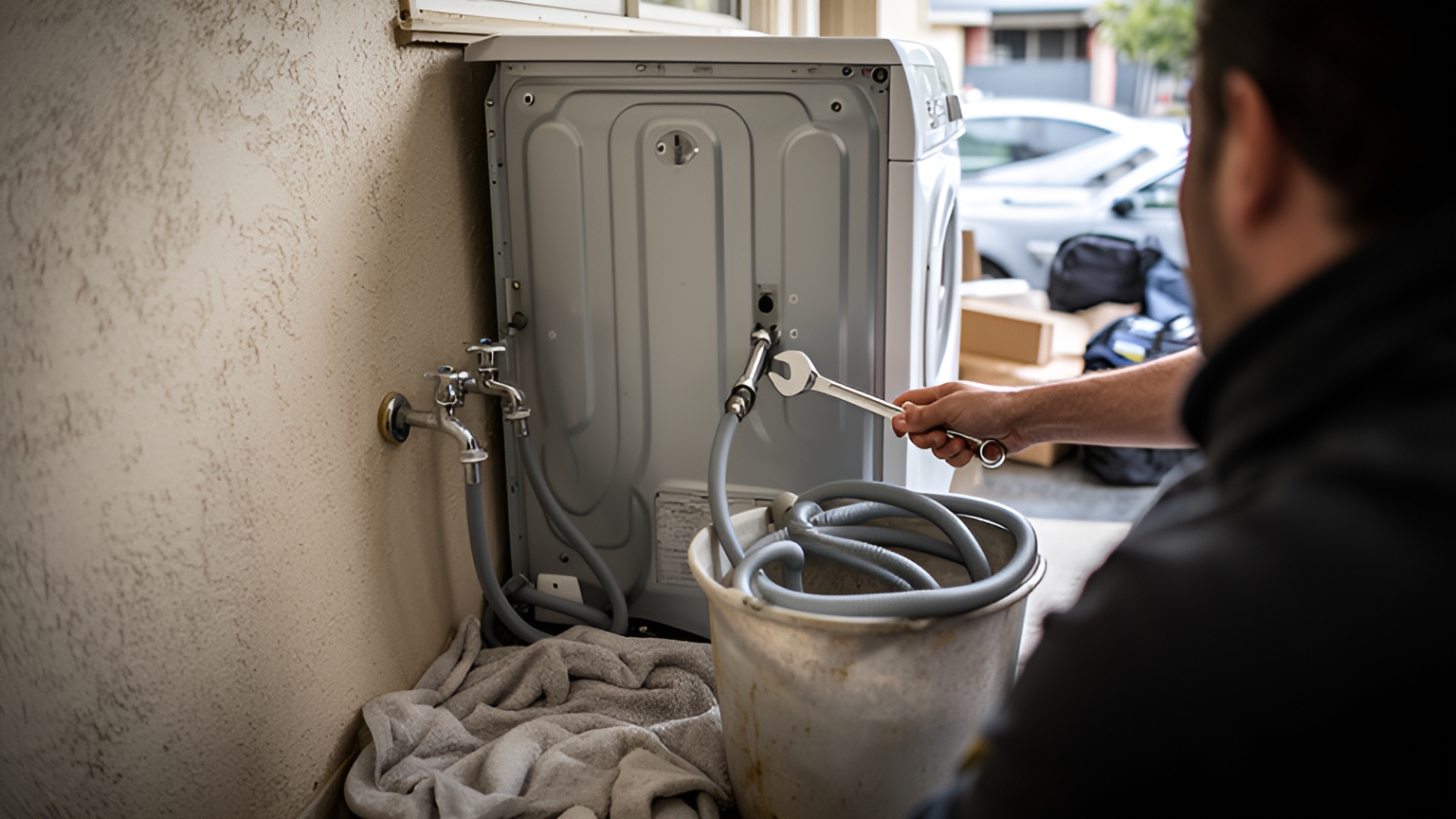
- Turn off both taps fully, then unplug at the wall. Lay an old towel on the floor under the taps before you touch a hose.
- Undo the inlet hoses at the taps first, with a bucket held underneath, then undo them at the back of the machine. A little water always escapes.
- Unhook the drain hose from the laundry tub or standpipe (the upright pipe in the wall it hooks into) and lower its end into a bucket sitting below the hose outlet. Water only drains downhill, so a bucket at the same height catches nothing.
- Check the drain filter on a front loader. Many have one behind a small panel at the bottom front, sometimes with a short emergency drain tube. Follow the manual, slide a shallow tray underneath and open it slowly.
- Fit the transit bolts exactly as the manual shows. This often means removing small plastic caps from the back first, so keep those caps.
Before bed, leave the door or lid ajar, wipe the rubber door seal dry and pull out the detergent drawer to air. A damp drum sealed up for a day is how a machine arrives smelling musty.
Then pack the small parts. Bag the inlet hoses on their own, label the hot and cold ends with masking tape, and add the washers and plastic caps to the same bag. The labelling habits in this guide to preparing a parcel for courier delivery work just as well for a bag of hoses and fittings.
Finally, tape the drain hose and power cord flat against the back of the machine so neither drags on the floor or catches on a door frame.
Measure doorways, stairs, lifts and parking at both homes
A washing machine that slides neatly into a laundry nook can still jam at a hallway corner. Measure its height, width and depth with a tape, including the knobs on the front and the hose connectors at the back, then allow extra room for the hand truck and your hands.
Flats and apartments made up 14.2 per cent of occupied private dwellings in the 2021 Census, according to the Australian Bureau of Statistics QuickStats. If either home is an apartment, contact the building manager or strata office early to book the lift, ask for protective lift padding, and check any time limits on the loading dock or loading zone. Do this for both buildings, not just the one you are leaving.
Houses have their own quirks. A raised Queenslander in Brisbane can mean a full flight of external stairs, and a narrow inner-city terrace in Sydney or Melbourne often has a long hallway with a tight turn at the back.
| Access point | What to check | What to do before moving day |
|---|---|---|
| Front and internal doors | Clear width with the door fully open | Lift a door off its hinges or remove the screen door if the fit is tight |
| Hallways and corners | Width at each turn | Clear rugs, shoes and furniture, and decide which way the machine turns |
| Stairs | Width, handrails and tight landings | Plan a rest stop at each landing and pad the walls with blankets |
| Lift | Internal depth, door width and booking rules | Book the lift and padding at both buildings |
| Parking | Loading zone, driveway, time limits, slopes, gravel and the distance from kerb to door | Tell whoever is driving exactly where to park and how far the carry is |
| New laundry | Space, tap position and drain point | Confirm the hoses reach the taps and the drain hose has a tub or standpipe |
How two people and a hand truck make the lift safer
In WorkSafe Victoria's workplace manual handling data, 35 per cent of the injuries were to the back, and the controls it lists include hand trucks. That data covers workplaces rather than household moves, but the practical lesson carries over: let a wheeled aid take the weight, and never carry the machine alone.
A hand truck is an upright trolley on two wheels with a flat plate at the bottom. An appliance version has a tall frame and a ratchet strap, and many hire shops lend or rent them.
- Wear closed shoes and gloves with good grip.
- Lay cardboard or old blankets over floorboards, tiles and the first few stairs.
- Walk the machine out from the wall by rocking it gently side to side, rather than dragging it.
- Slide the hand truck plate under the side of the machine, never pushing against the door or control panel.
- Strap it firmly to the frame before you tilt it.
- Tilt back only as far as the hand truck needs to roll. One person controls the handles while the other steadies the machine and watches the path.
- On stairs, take one step at a time. The person on the handles stays above the machine, and the helper guides from the side and calls each step.
- Never lift by the door, lid, detergent drawer or control panel. They are not built to carry the machine's weight.
Arrange your second person for both ends before the day. A friend who can meet you at the new home on arrival saves a solo struggle at the kerb.
How to load and secure a washing machine for the trip across town
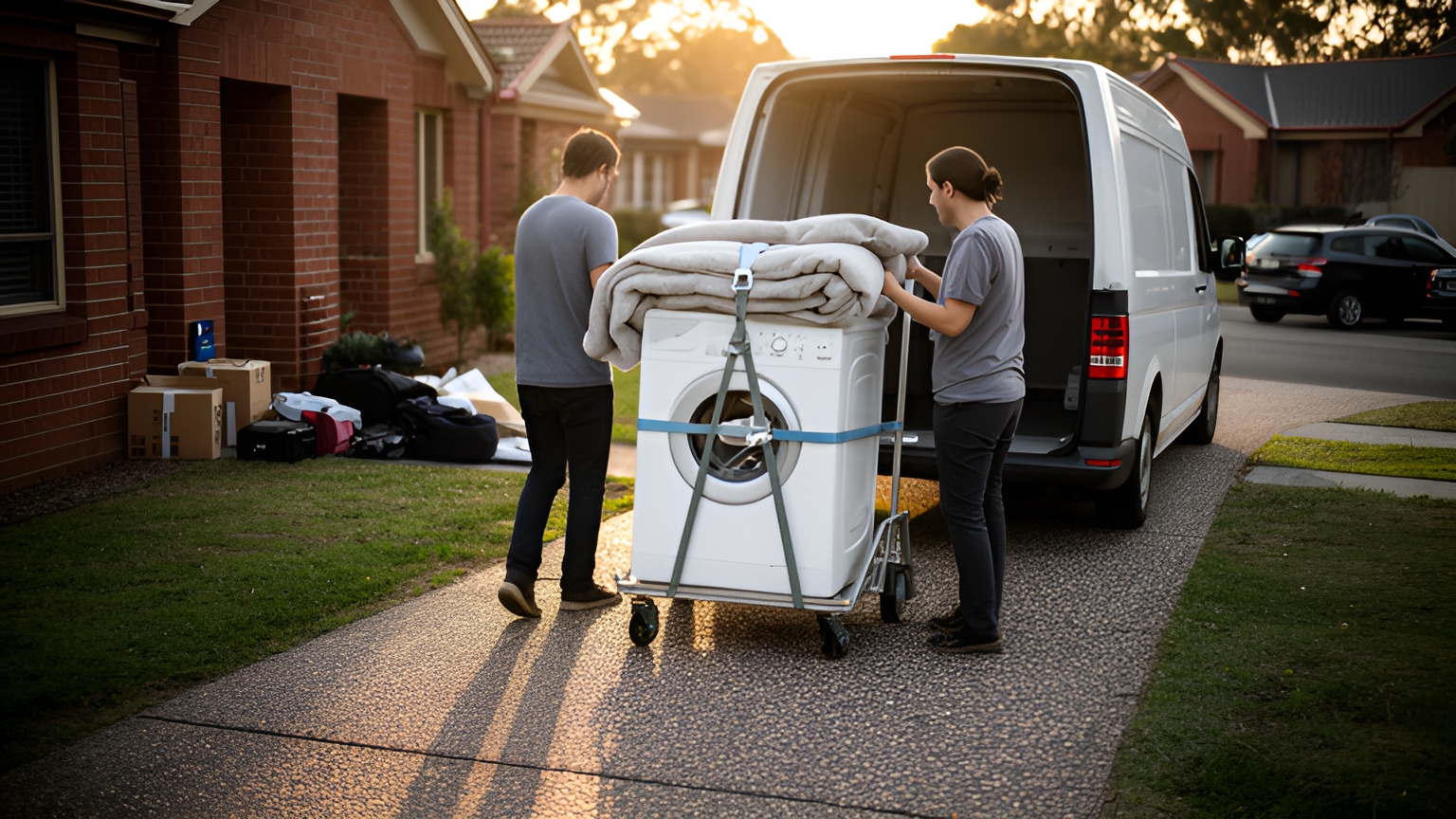
Position the machine in the vehicle the way the manual advises, which for many models means standing upright. Push it hard against the front wall of the cargo area, behind the cab, so it has nowhere to slide when the driver brakes.
Anchor points are the metal loops or rails fixed to the floor or walls of a ute tray, van or trailer. Straps go through these, not around a loose bar or the edge of a tray.
- Wrap the machine in moving blankets and tape cardboard over the corners.
- Run one ratchet strap to hold it against the front wall and another to stop it sliding sideways. Keep straps across the body of the machine, away from the door and controls.
- Stack nothing heavy on top, and keep boxes from leaning on the door or lid.
- In an open ute or trailer, add a tarp or heavy plastic sheet over the blankets in case of rain or dust.
- Drive gently. Take speed humps, driveways and kerb ramps slowly, and leave extra braking distance.
The Australian Bureau of Statistics found that of the people who changed address between 2016 and 2021, the vast majority (87.0%) moved within the same state or territory. Within the same state can still mean a long drive, such as Brisbane to Cairns or Perth to Albany, so on anything longer than a cross-town trip, pull over after the first few minutes and at every stop to recheck the straps.
Moving the fridge on the same trip? The guide on how to move a fridge safely covers its preparation, so both appliances can be planned into one load.
Picking a cooler, drier window and setting up in the new laundry
The Bureau of Meteorology defines a heatwave as a period of abnormally hot weather lasting three or more days. Check its forecast in the week before your move. If a heatwave is on the way, start the lifting early in the morning, keep water and shade breaks handy, or shift the move to a cooler day.
Heat also matters for the machine. Take it straight to the new home rather than leaving it in a hot vehicle overnight, where any moisture left in the drum or seal can turn sour.
Rain is the other thing to plan around. The Bureau of Meteorology notes that the northern wet season extends from about October to April in the far north of the Northern Territory. If you are moving in Darwin in those months, or anywhere a storm is forecast, keep a plastic sheet over the machine between the door and the vehicle and bag the plug. If the machine does get wet, let it dry fully and check the manual before plugging it in.
At the new laundry, set up in this order:
- Remove every transit bolt before the first wash, push the plastic caps into the holes, and tape the bag of bolts to the back of the machine.
- Slide the machine into place and level it with the adjustable feet, using a spirit level or a level app on your phone. Press each corner: it should not rock.
- Let it stand for as long as the manual advises before running it.
- Connect the inlet hoses hot to hot and cold to cold, using your labels. Replace any washer that looks flattened or cracked.
- Hook the drain hose into the tub or standpipe and secure it so it cannot jump out under pressure.
- Turn the taps on slowly, check each connection for drips, then plug in.
Booking a driver with the right vehicle through Zoom2u
Every step above holds whether you drive the machine yourself or book a driver. For a washing machine going across town, you can book heavy item delivery for furniture and white goods through Zoom2u, which covers white goods on tailgate trucks: trucks with a lifting platform at the back that raises the machine from ground level to the tray. Bookings come with an online estimate and live tracking.
If the machine needs to go straight from the old laundry to the new one with no other stops, the VIP courier option for direct delivery means the first available independent driver who accepts the job collects it and takes it directly to the destination.
A few details in the booking help the independent driver who accepts the job turn up ready:
- Describe the stairs, lift and parking at both ends, including any lift booking times or loading zone limits.
- Mention whether it is a top loader or front loader and its weight from the specification page.
- Arrange a second person at each end to help lift, and let the driver know they will be there.
- Have the machine drained, bolted, wrapped and close to the door, with the bag of hoses taped to it.
Live tracking also tells your helper at the new home when to be waiting at the kerb. And if a few boxes of laundry gear need to follow separately, same-day courier delivery includes live GPS tracking and photo proof of delivery.
Frequently asked questions
Can you lay a washing machine on its side or back to move it?
It depends on the model, so check the manual before tilting it beyond what a hand truck needs. Top loaders and front loaders are built differently, and the manual says how the machine should travel and whether it needs to stand for a while before its first wash.
Do I need transit bolts for a short move a few suburbs away?
Fit them if your model uses them. Distance makes little difference: kerbs, speed humps, stairs and the tilt onto a hand truck all swing an unlocked drum, so lock it even for a ten-minute trip.
Should I move the washing machine in my rental, or does it stay?
Check your lease and the entry condition report before disconnecting anything. If the washer was supplied with the property, it stays, and your property manager can confirm what is included and who to contact if it needs moving.
How do I stop a washing machine smelling after the move?
Leave the door or lid ajar overnight before moving day, wipe the door seal dry and pull out the detergent drawer to air. At the new home, run a short empty cycle once the transit bolts are out and the hoses are checked.
What should I check the first time I run it at the new home?
Confirm every transit bolt is removed, the machine sits level, and the hoses are tight at the taps. Then run a short rinse cycle and stay nearby, checking behind the machine and under the taps for drips before you leave a full load running.
This article was drafted with AI assistance and checked by automated editorial, fact and legal review before publishing. Photographs are AI-generated.