To send a large item interstate, start by measuring it against the tightest doorway or stairwell at the delivery address. Next, decide whether it can share a truck or needs its own vehicle, door to door. Pack it for a long trip. Check the route for a Tasmanian sea crossing or northern wet-season roads. Then brief the receiver.
Measure your large item against the tightest point at the delivery address
The item's own size matters less than the narrowest gap it has to pass through at the other end. A couch that left a Melbourne house easily can still stall at the stairwell turn of a Gold Coast unit, so measure both the item and its path.
Start with the item. Measure its width, depth and height in centimetres at the widest points, including handles, feet, legs, hinges and any trim that sticks out.
Then ask the receiver to measure every pinch point between the street and the room where the item will live:
- the clear width of the front door, measured from the door stop to the frame with the door fully open
- hallway corners and any turn on the stairs, including the ceiling height above the turn
- the lift door, plus the depth and height inside the lift
- side gates, balcony doors and garage clearance if the item is going in a back way
A phone photo of each spot with a tape measure held across it is more useful than a number in a text message, because it also shows tight corners and low light fittings.
Worked example, using assumed measurements: a wardrobe is 90 centimetres wide, 60 centimetres deep and 200 centimetres tall, and the front door opening is 80 centimetres wide and 204 centimetres high. Carried face-on, it is 10 centimetres too wide. Turned side-on, its 60-centimetre depth fits the width, but only 4 centimetres of headroom remain, too little to tilt it past a step, so dismantling it is the safer plan.
Next, find the weight. It is usually printed on the specification label of a fridge or washing machine, or in the manual or the original product listing. The weight tells you how many people need to be on hand to lift at each end, so pass it on when you book.
Some apartment buildings ask residents to book a goods lift or hang protective padding before a delivery. Ask the receiver to check this with the building manager early.
Finally, photograph the item from every side before you pack it. Those photos become your record of its condition at pickup.
Choose between a shared interstate run and a dedicated door-to-door job
There are two common ways a large item travels between states by road, and the choice shapes how you pack it and when it arrives.
A shared interstate run carries items from several senders on the same truck. Your item may be picked up, taken to a depot (a warehouse where items are held and sorted), loaded with other freight, unloaded at a depot near the destination, then delivered on a later run. That means more loading, unloading and waiting points along the way, so it suits sturdy, well-packed items and flexible timing.
A dedicated door-to-door job puts your item in one vehicle that goes from the pickup address to the delivery address with no transfers. It suits fragile, valuable or awkward items, and anything that has to arrive by a set day.
| Your situation | Option that usually suits | Why |
|---|---|---|
| Boxed flat-pack furniture with no deadline | Shared interstate run | It is sturdy once boxed, and timing can flex |
| An antique sideboard going from Ballarat to Toowoomba | Dedicated door-to-door job | Fewer handovers for a piece that cannot be replaced |
| A fridge needed working on the first night in a new home | Dedicated door-to-door job | Arrival day matters as much as condition |
| A mattress sealed in a mattress bag | Either | A clean, bagged mattress handles a shared run well if timing is flexible |
| Anything going to or from Tasmania | Ask how the sea crossing is handled | No road-only option exists across Bass Strait |
Whichever option you choose, ask these questions before you book:
- How many times will the item be loaded, unloaded or moved between vehicles?
- Who lifts it at each end, and how many people will be there?
- What cover applies? Cover is what the provider will pay if the item is lost or damaged, so ask what it includes, what it leaves out and whether you need to declare a high-value item.
- Where does the item wait if the delivery is delayed?
For something that takes more than one person to lift, such as a fridge or a solid timber dresser, read how heavy item delivery works, including who does the carrying at each address, before you settle on a pickup date.
Pack a fridge, mattress, bike, TV or wardrobe for a long road trip
An interstate trip means hours of road vibration, and possibly several rounds of loading. Pack each item for the way it will actually be handled, not just to keep dust off.
- Fridge. Empty it, switch it off and let it defrost the day before, then wipe it completely dry so it does not grow mould on the road. Take out the shelves and drawers and wrap them separately. Keep the doors shut with stretch wrap or a soft strap rather than tape, which can lift paint, and send it upright. At the other end, check the manual for how long it should stand before you switch it on.
- Mattress. Seal it in a mattress bag so it stays clean and dry. Ask how it will be stored on the truck: most should travel flat or on their side, and should never be folded unless the maker says they can be.
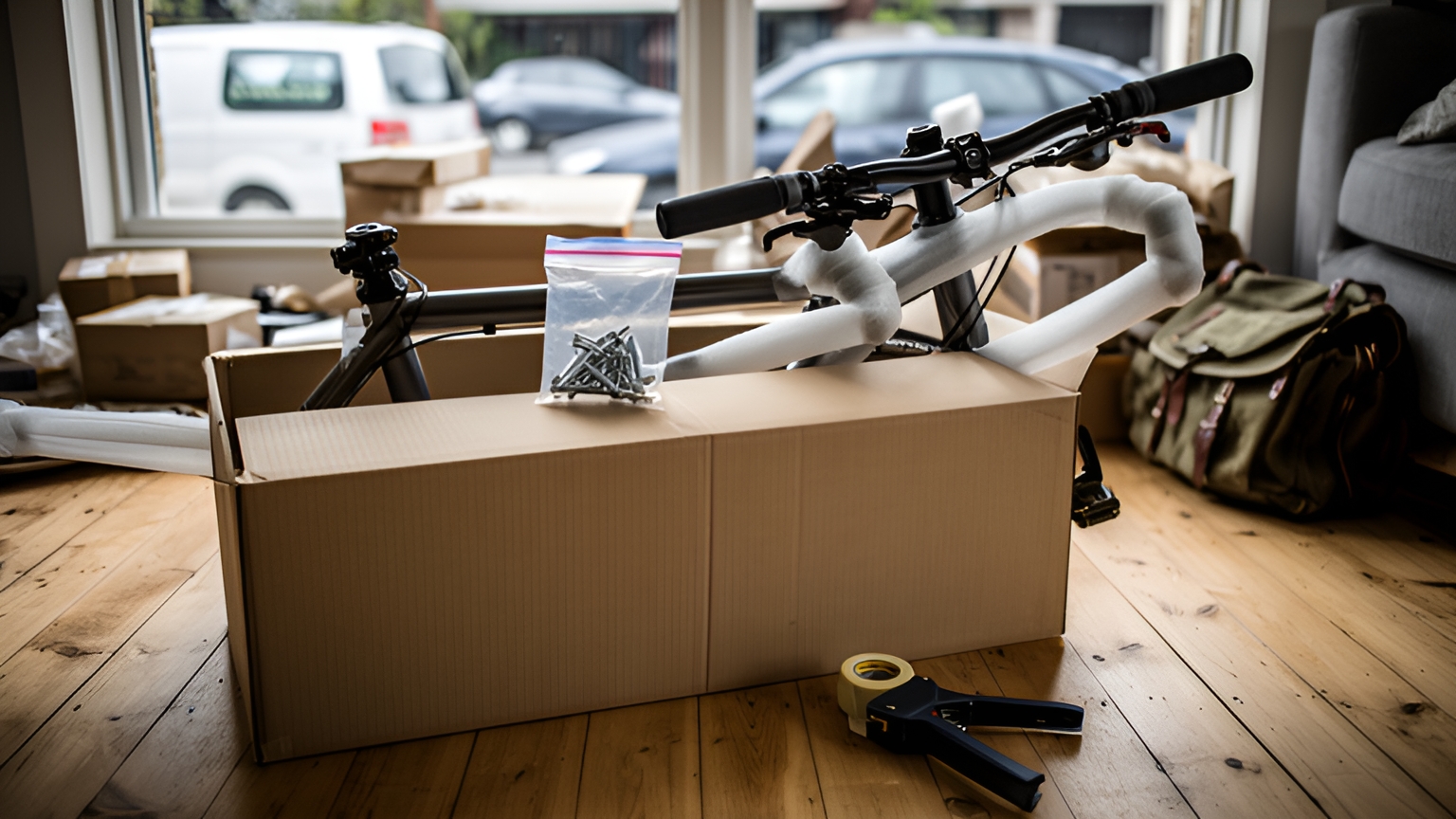
- Bike. Take the pedals off, turn the handlebars in line with the frame and remove the front wheel. Wrap the rear gears and chain, then put everything in a bike box or wrap the frame in padding. Zip the loose parts and tools into a bag tied to the frame.
- TV. The original box and foam give the best protection. Without them, cover the screen with a flat sheet of stiff cardboard, wrap the whole TV in a blanket, and mark the box with the screen side and the way up. Remove the stand, bag its screws and tape the bag to the back of the TV. A TV should travel upright, never lying flat.
- Wardrobe. Photograph each stage as you take it apart, so the receiver can rebuild it. Put the screws and hinges in a zip-lock bag labelled with the item's name and tape it inside a panel. Wrap mirror panels and doors on their own, then bundle the remaining panels together with padding between them.
Label every piece with the receiver's name, address and phone number, and number the pieces with the total count, so a missing piece is noticed at the door rather than a week later.
If boxes are travelling with the larger pieces, the guide to packing boxes for an interstate trip covers filling, taping and labelling them so they stack safely beside furniture.
Check your route for a Bass Strait crossing or northern wet-season roads
Two Australian routes change how a large item travels: anything crossing to or from Tasmania, and anything heading into the tropical north between late spring and autumn. Check whether your trip is one of them before you agree on a delivery date.
Tasmania. In explaining its road freight survey, the Australian Bureau of Statistics describes freight moved from Sydney to Hobart as including a component "by sea from Melbourne to Devonport". In practical terms, a large item cannot make the whole trip between the mainland and Tasmania by road alone.
That sea leg adds a handover at each port and depends on sailing schedules. Before you book, ask:
- which sailing the item is planned for, and what happens if it misses that one
- where the item is held before and after the crossing
- whether a dedicated job stays with the item across Bass Strait or hands it on at the port
The Department of Infrastructure says the Tasmanian Freight Equalisation Scheme "provides financial assistance for cost incurred by shippers of eligible non-bulk goods moved by sea across the Bass Strait". Eligibility is set out on that page, so read it there rather than assuming it applies to a household move.
The tropical north. The Bureau of Meteorology says the monsoon, the seasonal shift in winds that brings long spells of heavy rain, "is part of northern Australia's wet season from November to April". The Bureau of Meteorology also notes that it "can cause flooding and cut off roads".
Recent closures show what that looks like on a delivery route. ABC News reported in February 2026 that "The Bruce Highway was cut in both directions at Proserpine, north of Mackay". Later the same month, ABC News reported that "Dozens of roads have been closed, impacting transport and freight across the Northern Territory".
If your item is going to or through north Queensland, the Northern Territory or northern WA during the wet season:
- send it before the wet season starts or after it ends if your move date can flex
- leave extra days between the planned arrival and the day the item is truly needed
- check the state or territory transport department's road conditions information on the morning of pickup
- ask the provider, in writing, where the item waits if a road is cut and who tells the receiver
Set a realistic delivery window and brief the person receiving it
Interstate road trips are long, and any one of a weather delay, a missed sailing or a full depot can shift the arrival day. Plan for the item to arrive in a window of days, not at a fixed hour.
Avoid booking delivery for the morning a new lease starts or the day of a family event. Aim for the item to land a few days before it is needed, so a small delay costs nothing.
Agree every time in the receiver's local time. Queensland, WA and the NT do not use daylight saving, so the gap between them and the other states changes across the year: in summer, Brisbane runs an hour behind Melbourne, while in winter the two cities match. Perth runs behind every eastern capital all year.
Public holidays also differ by state. Check the holiday calendar at both ends, because a long weekend at the destination can push a delivery to the following week.
In an interstate move, the sender is often not at the delivery end, so the receiver needs a short brief. Send them:
- a list of what is coming and how many pieces in total
- your pickup photos, so they know how each piece looked when it left
- the access details: parking, lift booking, stairs and the room each piece goes to
- the contact details for the job, so they can call directly on the day
- your agreement that they can sign on your behalf
Ask the receiver to count the pieces and look over corners, legs and screens before signing. If something is marked or missing, they should photograph it, note it on the delivery paperwork and send it to you straight away.
If you are working through a whole move, the checklist of things to send ahead when moving interstate helps you decide which pieces travel early and which travel with you. For one of the most common long-distance moves, the guide to moving from Melbourne to Brisbane walks through timing for that route.
Sending the urgent, flight-sized pieces of your move through Zoom2u
Most large furniture travels by road, and the planning above is about getting it there in one piece. The smaller, time-critical parts of a move are different. The keys for the new place, signed documents for a lease or a bike part you forgot to pack can travel by air rather than waiting for the truck.
For those pieces, Zoom2u connects you with independent drivers and carriers to move time-critical freight on the next available flight between Australian cities. An independent driver who accepts the job collects the item and takes it on its way.
Before you book, look up your pair of cities on the interstate routes page, which lists capital city routes, daily flights and transit times. The details of the urgent interstate delivery service explain how a booking through the platform works. Same-day arrival is possible, depending on cut-off times (the latest time an item can be handed over to make a particular flight) and flight availability.
Splitting a move this way keeps the deadline items off the long road trip, so a weather delay on the highway does not hold up the keys to the front door.
Frequently asked questions
Is it worth sending a cheap flat-pack item interstate, or should I buy a new one?
Weigh the item's sentimental value and how hard it is to replace against the effort of dismantling, packing and booking it. A family sideboard or a good mattress usually earns its place on the truck. A worn flat-pack bookcase that may not survive being taken apart twice is often better sold or donated before you go.
Can a large item like a bike or TV go on a flight interstate?
Some bulky items, such as a boxed bike or a smaller boxed TV, may suit air travel if their size and weight fit what a commercial flight can carry. Furniture and whitegoods generally travel by road. Anything with a battery, gas or fuel, such as an e-bike or a camping fridge, may be subject to rules, so check with the Civil Aviation Safety Authority (CASA) and the airline before choosing air.
What should I do if my item arrives damaged?
Photograph the damage before you finish unwrapping, write a short note on the delivery paperwork if you can, and contact the provider you booked with promptly, sending your pickup and delivery photos together. For general information on your consumer rights, the Australian Competition and Consumer Commission (ACCC) website is the place to start.
What happens if a road closes while my item is on its way?
Ask before you book where an item waits if a road is cut, who tells the receiver about the new delivery time, and whether the item can be rerouted. Having those answers in writing means nobody is left guessing while the route reopens.
This article was drafted with AI assistance and checked by automated editorial, fact and legal review before publishing. Photographs are AI-generated.