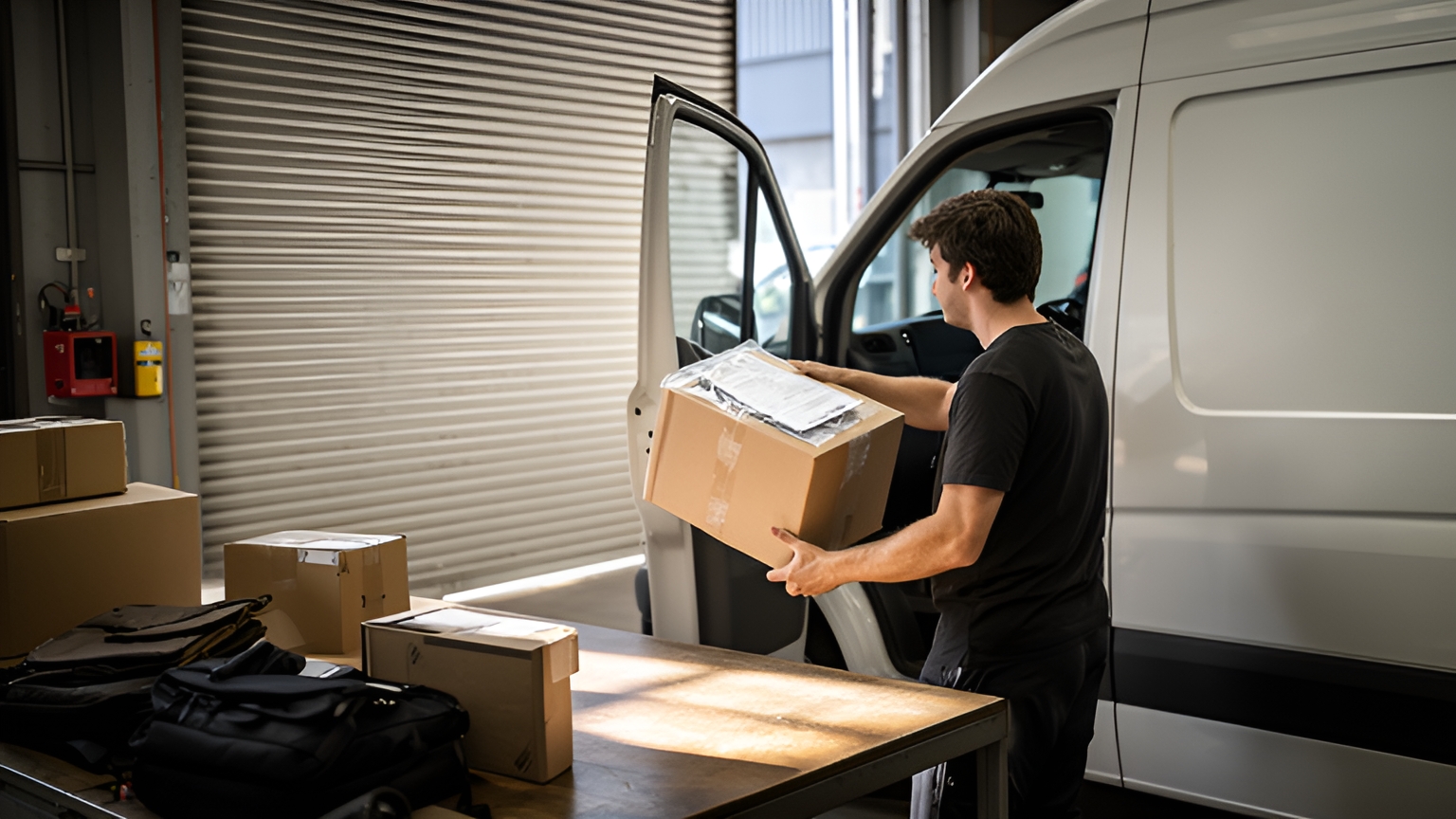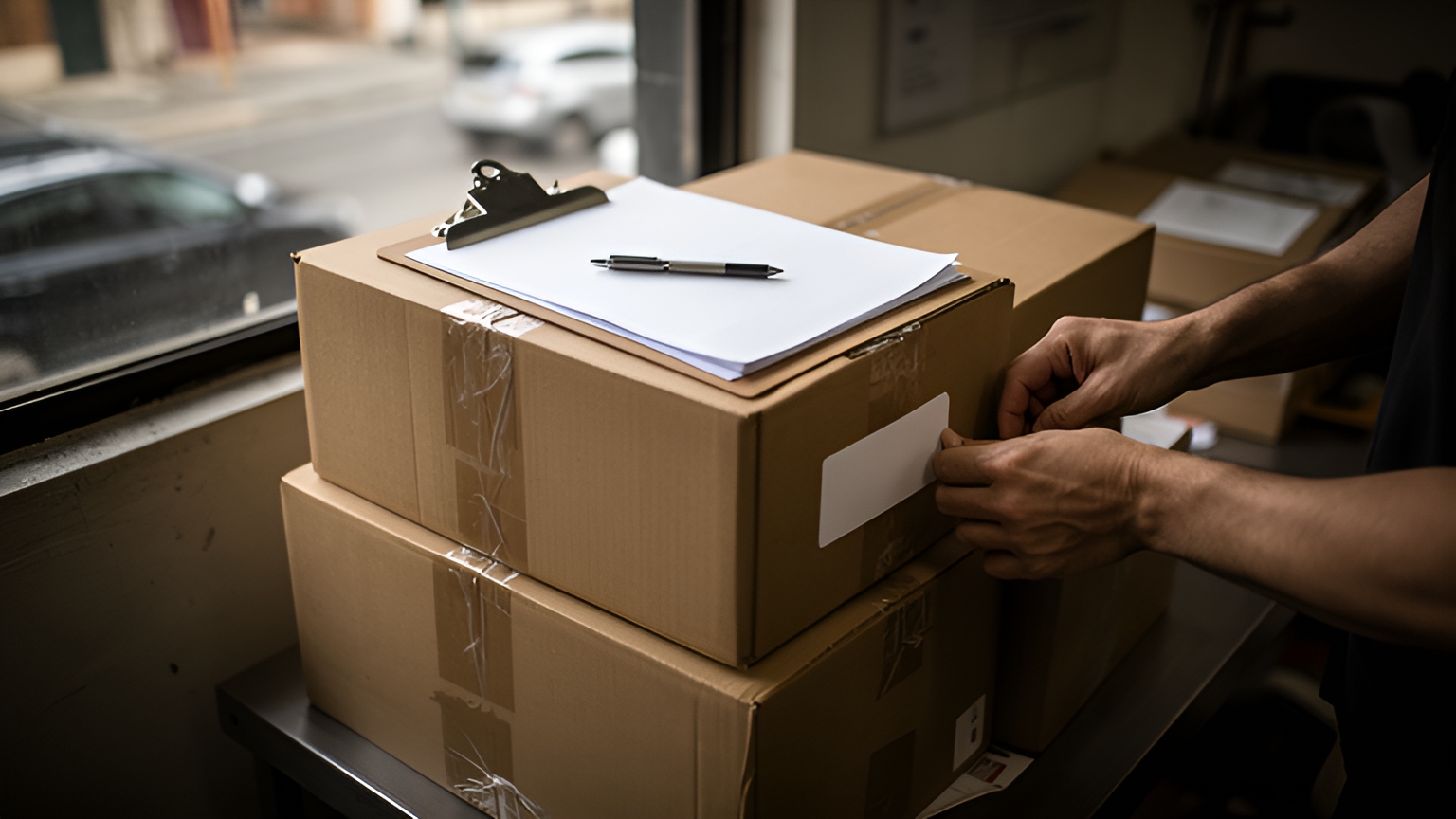
A consignment note, or con note, is the document that travels with a delivery and identifies it: who is sending it, who is receiving it, what is inside, how many pieces there are and any handling or delivery instructions. The sender usually fills it in, and it becomes the reference for tracking, proof of delivery and any claim.
What a consignment note does: one document for one consignment
A consignment is a set of goods moving together from one sender to one receiver as one job. The con note works like its identity card. Anyone who handles it, from the person loading it at your back door to the receptionist signing at the other end, can see what it is and where it belongs.
The Australian Border Force describes a consignment this way for goods coming into the country: "A consignment typically consists of goods that form part of a single order between a consignor and consignee. The goods within a single order do not have to arrive at the same time to be considered a single consignment." In plain words, the consignor is the sender and the consignee is the receiver.
That logic also works for deliveries inside Australia. Treat one customer order as one consignment, give it one reference, and keep that reference the same on every note and label linked to it, even if the goods travel in two loads.
A simple decision rule for how many con notes you need:
- Same order, same receiver, same address: one con note, with the total number of pieces written on it.
- Same order, part now and part later: one reference across both notes, with each note marked as the first or second part of the order.
- Different receivers or different addresses: a separate con note for each, even if the goods sit on the same invoice.
The details that make a consignment easy to identify and deliver
There is no single government-set format for a domestic con note. A useful test comes from the cargo paperwork rules: the Australian Border Force says the commercial document must contain enough information to identify the consignment. For a local job, ask the same question: could someone who has never seen this parcel read the note and get it to the right person?
Here is what to write, and the problem each detail solves.
- Sender name, pickup address and an on-site contact. The driver can find the goods quickly, even if the person who booked the job has stepped out.
- A realistic ready time. Write the time the goods will be packed, taped and labelled, not the time packing starts. On a fast job across a city, this matters more than the weight.
- Receiver name, business name and a phone number someone will answer. A mobile for the person expecting the goods beats a general line that rings out at lunchtime.
- Full delivery address with access detail. Add the level, suite, entrance, loading dock, lift, parking and any after-hours instructions. A level number on its own does not tell anyone whether to use the front lift or the dock.
- Your reference. Use your order, invoice or purchase order (PO) number, so the delivery matches your records and your customer's.
- Contents in plain words. Be specific, such as framed artwork or a boxed laptop, rather than a general word like goods.
- Piece count and labels. Each piece carries the reference and its place in the set.
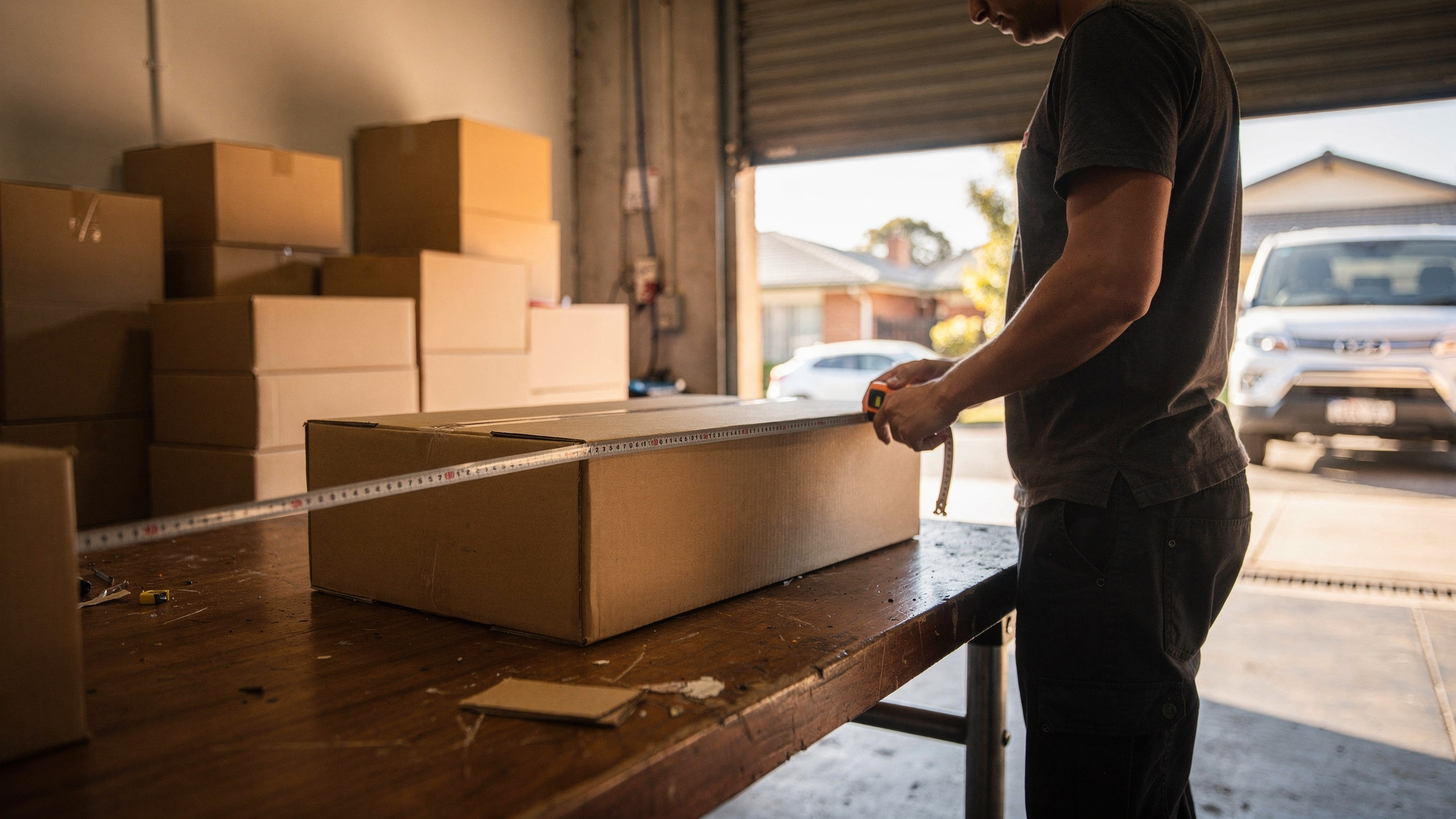
- Dimensions and weight of each piece. Measure in centimetres and weigh in kilograms. Bulky but light parcels may be charged by cubic weight, which is a weight worked out from size, so see these worked examples of cubic weight before you measure.
- Handling notes. Fragile, keep upright, do not stack or keep dry, written only where they truly apply so they keep their meaning.
- Delivery instructions. Signature required, hand to a named person only, or an authority to leave, which is your permission for the goods to be left without a signature at a spot you name.
Worked example, on assumed details: an order of three cartons goes on one con note showing three pieces. Each carton is labelled with the order reference and 1 of 3, 2 of 3 or 3 of 3, so a missing carton is obvious at both ends.
Filling in a con note for express, dedicated direct and interstate jobs
The same fields apply to every job. What changes is which field needs the most care.
| Job type | What it means | Detail that needs the most care |
|---|---|---|
| Express | A fast, time-bound delivery within a city, such as delivery within three hours | An accurate ready time and a receiver who is there |
| Dedicated direct | A vehicle travels straight from pickup to drop-off carrying only your job | Handover instructions: who receives it, whether to wait, and anything coming back |
| Interstate | Door to door across a state or territory border, over a longer distance | Packing, piece labels, contacts and times in the receiver's local time |
Worked example, express across Melbourne (assumed details). An accounting practice in Richmond is sending a sealed envelope of signed documents to a client in Brighton. The note gives a ready time of 11am, when the envelope will actually be sealed and waiting at reception, plus the client's mobile, the client file number and the instruction to hand it to the client by name, with a signature.
Worked example, dedicated direct from Brisbane to the Gold Coast (assumed details). An electrical contractor is sending a replacement part from its Brisbane workshop to a building site in Southport. The note names the site supervisor, gives their mobile, describes which site gate to use and asks the driver to wait while the part is checked.
If the old part is coming back to Brisbane, that is a second consignment travelling the other way. Give it its own note and reference, so each leg has its own record.
Worked example, interstate from Adelaide to Darwin (assumed details). An online homewares seller is sending a three-carton order to a customer in Darwin. Each carton is packed for a longer trip, labelled with its place in the set, and the note gives a backup contact as well as the customer's mobile.
Write any time on an interstate note in the receiver's local time, and say so. Queensland, Western Australia and the Northern Territory do not use daylight saving, so the time gap between them and the southern states changes across the year.
For sends heading north, the Bureau of Meteorology says: "Australia's tropical cyclone season runs from 1 November to 30 April." In those months, add that second receiver contact, pack cartons to stay dry, and check the Bureau's warnings for the destination before you book.

Who fills in the con note, who keeps a copy and how proof of delivery fits
The sender fills in the con note, because only you know what is inside, how many pieces there are and who is expecting them. That can be on paper or entered electronically when you book the job.
At pickup, a quick count together with the driver confirms the piece count on the note matches what is handed over. If something is not ready, update the note before the goods leave, not after.
Keep copies in a simple pattern:
- Your copy: filed against your own order or job reference, alongside the invoice.
- The travelling copy: attached to the goods or held electronically with the booking.
- The receiver's copy: useful for your customer to check off what arrived.
Proof of delivery is the other half of the record. A signature, a photo or a recorded authority to leave shows the handover at the delivery end, while the con note shows what left your premises and where it was going.
Match the proof to the job. Signed originals and valuable items suit a signature from a named person, routine parcels to a staffed office often suit a photo, and an authority to leave works only where there is a safe, sheltered spot. For more on choosing, see this guide to proof of delivery for business senders.
Store the proof with the con note under the same reference. When a customer asks where their order is, you can answer from one file.
How customs uses consignment details for goods arriving from overseas
If your business imports stock or parts, the same idea of a consignment runs through customs. The Australian Border Force says cargo reports and import declarations are made at the consignment level, so each consignment is the unit that gets reported.
Check the Australian Border Force cargo reporter obligations page to see who is responsible for these reports for your goods.
What you can do is make your order easy to match to its consignment:
- Ask your supplier to show your exact business name, delivery address and order number on their shipping documents.
- Keep the supplier's invoice and shipping documents together under your own order reference.
- When the goods arrive and move on to you, use that same reference on any local con note.
Duties and taxes may also apply to imported goods. The Australian Border Force notes: "Importers may face financial penalties or legal action if they do not pay the correct duties and taxes." Check what applies to your goods on that page before you place a large order.
Where to check the rules on what is inside a consignment
An accurate, plain-words description of contents on the con note is your part of the job. What can be carried, and how, is set by regulators, so check with the right one before you book anything you are unsure about.
- Anything travelling by air: the Civil Aviation Safety Authority states that "Penalties can apply for incorrectly packaging, declaring and shipping dangerous goods, including fines and imprisonment." Check CASA's current guidance before you book anything by air.
- Goods moving by heavy vehicle: the National Heavy Vehicle Regulator lists 10 functions that make someone a party in the Chain of Responsibility. Check its page to see whether they apply to you.
- Anything crossing the border: check with the Australian Border Force.
A practical habit: when a product is new to your range, check it with the relevant regulator once, note the outcome in your product records, and describe it the same way on every con note after that.
Turning your con note details into a Zoom2u booking
The checklist above doubles as your booking checklist. Before you book, have the pickup contact, ready time, receiver contact, access details, reference, piece count, dimensions, weight and delivery instructions in front of you, so what you enter matches your own records.
With those details ready, you can book same-day, three-hour or interstate business jobs through Zoom2u. An independent driver on the platform accepts the job, and you can follow it with live tracking. The same-day, three-hour and interstate delivery options for small businesses have no minimum volumes, so a single envelope is booked the same way as a regular run.
Online stores can look at same-day delivery for online stores, which describes store integrations, customer-facing tracking and photo proof. Keep the order number from your store as the reference, so the photo proof files straight against the right order.
Practices sending signed originals or court filings can use the legal document courier service, which describes chain of custody, meaning a record of who held the documents at each step, and signature on delivery. Write your matter or file number as the reference, and the con note, tracking and signature all point back to the same file.
Frequently asked questions
Is a consignment note the same as an invoice or a delivery docket?
No. An invoice is the bill between seller and buyer, and a delivery docket is often what the receiver signs. The con note identifies the goods while they are moving. Writing your invoice or purchase order number on the con note links all three, so you and your customer can match the delivery to your records in seconds.
Do I need a paper consignment note, or is an electronic one enough?
There is no single government-set format for a domestic con note, so what matters is that the details identify the consignment clearly and that you can find the record later. Many senders now enter the details electronically when booking. Whichever you use, keep a copy filed against your own job or order reference.
What should I do if a detail on the con note is wrong after pickup?
Contact the delivery provider as soon as you notice, with your reference number and the corrected detail, such as a new receiver phone number, a different level or a loading dock entrance. Update your own copy too, so the corrected version is the one you rely on if a question comes up later.
Does a consignment note prove the goods arrived?
Not on its own. The con note records what was handed over and where it was going. Proof of delivery, such as a signature, a photo or a recorded authority to leave, shows the handover at the other end. Keep both together for each job, so you can answer a customer query quickly.
This article was drafted with AI assistance and checked by automated editorial, fact and legal review before publishing. Photographs are AI-generated.