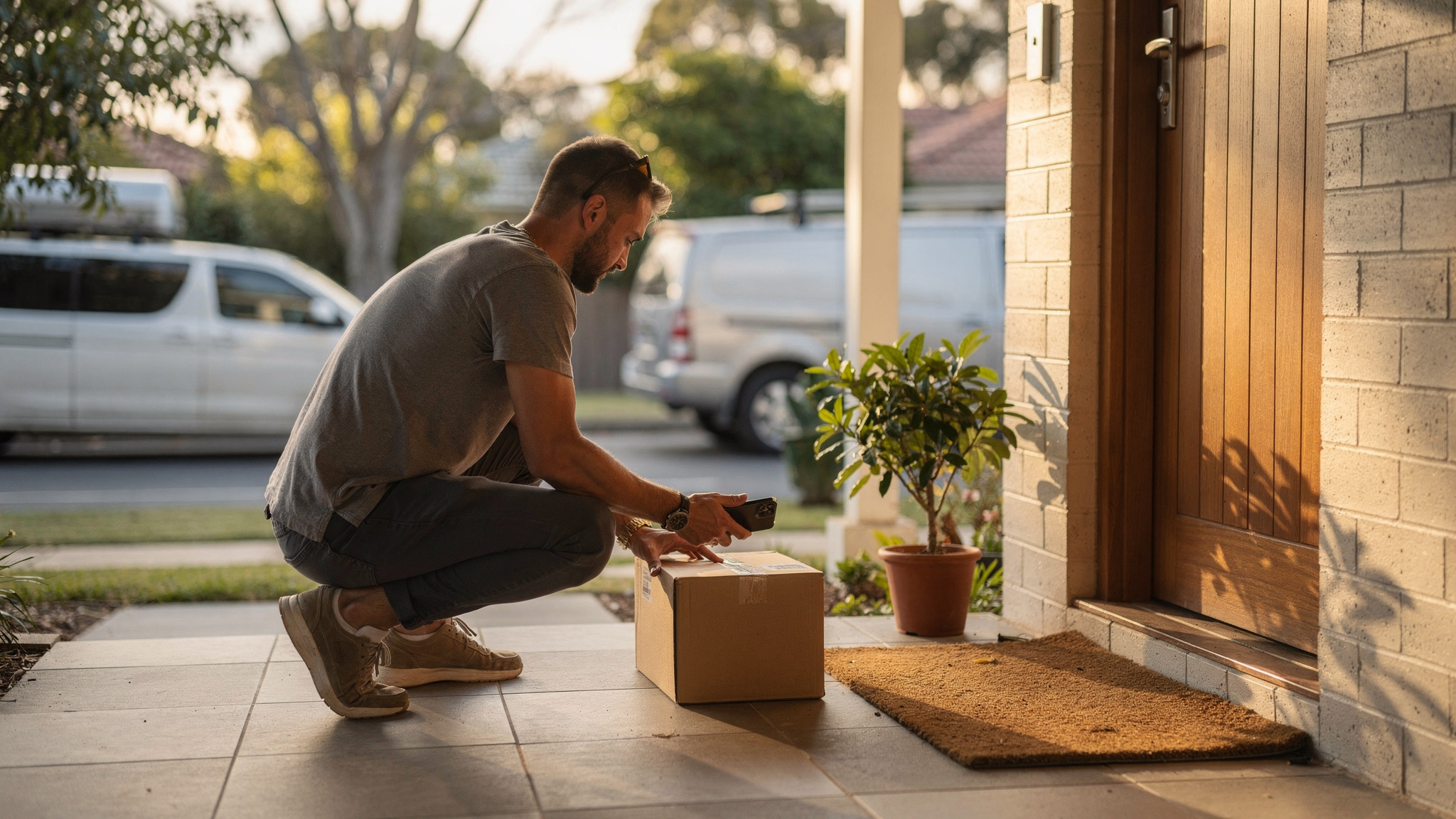
Authority to leave (ATL) is permission from the recipient for a driver to leave a parcel at a nominated safe place without anyone signing for it. For a business sender, ATL suits low-risk, easily replaced items. Valuable, temperature-sensitive or deadline items are better sent with a signature on delivery or a booked, in-person handover.
What authority to leave means when your business is the sender
Authority to leave belongs to the recipient. Your customer, or the business you are sending to, gives it. As the sender, you decide whether to offer it, restrict it for certain items, or book a delivery that does not need it at all.
For most small businesses, authority to leave shows up in three places:
- A tick box or delivery instruction field at your checkout or on your order form.
- The delivery notes you pass on when you book each job.
- Your terms and conditions, which should describe the safe places you accept.
When nobody is home and the recipient has not given authority to leave, the driver cannot complete the drop. That usually means a second attempt, a return to you or the customer collecting it. Each option adds time and a follow-up conversation.
So it pays to plan for who is likely to be home. The Australian Bureau of Statistics reports that "In August 2025, 36% of employed people usually worked from home." That is a workforce figure, not a delivery finding, but it is a good reason not to assume a buyer is home on a weekday.
Add a simple choice to your checkout: a safe place at home, a work address, or a preferred delivery time. Customers who will be out can then pick the option that actually works for them.
Deciding when to offer authority to leave, require a signature or book a handover
Before you decide, run each product line through three questions.
- Replacement. If this parcel went missing or was damaged on a doorstep, what would it take to replace it and send it again at your own cost? If the answer is quick and simple, authority to leave is reasonable.
- Exposure. Would a few hours in sun or rain harm it? If so, authority to leave depends on the destination and the season, which the next section covers.
- Deadline or identity. Must it reach a named person by a set time, or do you need confirmation of who received it? If yes, skip authority to leave and require a signature.
Then weigh the other side. A missed delivery costs a second run, a delay for the customer and time on the phone. For cheap, sturdy items, leaving the parcel is often the better experience for everyone.
| If the item is | Best option | Why |
|---|---|---|
| Sturdy, easily replaced stock such as phone cases, printed T-shirts or refill packs | Offer authority to leave | A loss is easy to make good, and a missed delivery is the bigger nuisance |
| High-value or one-off, such as jewellery, a laptop or a commissioned artwork | Signature on delivery or a booked handover | Replacing it is slow, costly or impossible |
| Personalised or made to order | Signature, or delivery timed for when the buyer is home | Remaking it takes time and holds up the customer |
| Temperature-sensitive, such as chocolate, cosmetics, fresh food or medication | A booked, in-person handover | A hot step or a wet porch can spoil it within hours |
| Contracts, tenders, settlement papers or signed originals | Signature on delivery to a named recipient | The deadline and the proof of receipt matter as much as the paper |
| Samples or stock for another business | Authority to leave only to a locked parcel room or secure dock, otherwise during staffed hours | An empty foyer is not a safe place |
Set this at product level in your store where you can, rather than as one rule for every order. Then tell the buyer at checkout which items in their cart need someone home.
Whatever you choose, look for an e-commerce delivery service with customer-facing tracking and photo proof, so buyers can follow the parcel and see exactly where it was left.
Checking the drop-off spot for heat, rain and shared entries
A safe place is only safe for the conditions on the day. Before you book a run of unattended deliveries, check three things about where the parcels are going.
Heat. Summer can turn a sunny front step into an oven. ABC News reported in January 2026 that "Large swathes of the country, spanning more than 3,500km from WA's north-west to Tasmania's north-east, have been placed under severe to extreme heatwave warnings from Wednesday to Saturday."
When heatwave warnings cover a buyer's area, switch off authority to leave for temperature-sensitive lines. Short-window options such as 3-hour delivery let a parcel arrive while the buyer is home instead of sitting in the sun.
Rain. In the north, the wet season runs from October to April. The Bureau of Meteorology reports that across Australia north of 26°S, rainfall in the October 2025 to April 2026 wet season was 44% above average and the seventh-highest wet season total on record.
For buyers in Darwin, Broome, Cairns or Townsville during those months, ask for a covered spot, pack in a waterproof outer layer, and book an attended delivery for anything paper-based or electronic.
Shared entries. Many buyers have no private porch. The Australian Bureau of Statistics reports that at the 2021 Census, of Australia's private dwellings, "70 per cent were separate houses, 13 per cent were townhouses and 16 per cent were apartments."
For apartment and townhouse addresses, ask how parcels are received: a concierge desk, a building parcel room or the intercom name to use. If none of those exist, treat the order as needing someone home.
Out of sight. The Australian Bureau of Statistics found, for theft in general rather than parcel theft, that "Most incidents of other theft occurred at the person’s home (61% or 120,600)." The practical step is the same either way: steer customers towards spots that cannot be seen from the street.
Even with authority to leave, a driver may judge that a spot is not safe on the day, perhaps because it is open to driving rain or in plain view. Plan for that by asking customers for a second choice, such as a named neighbour, and by telling them the parcel may come back for another attempt.
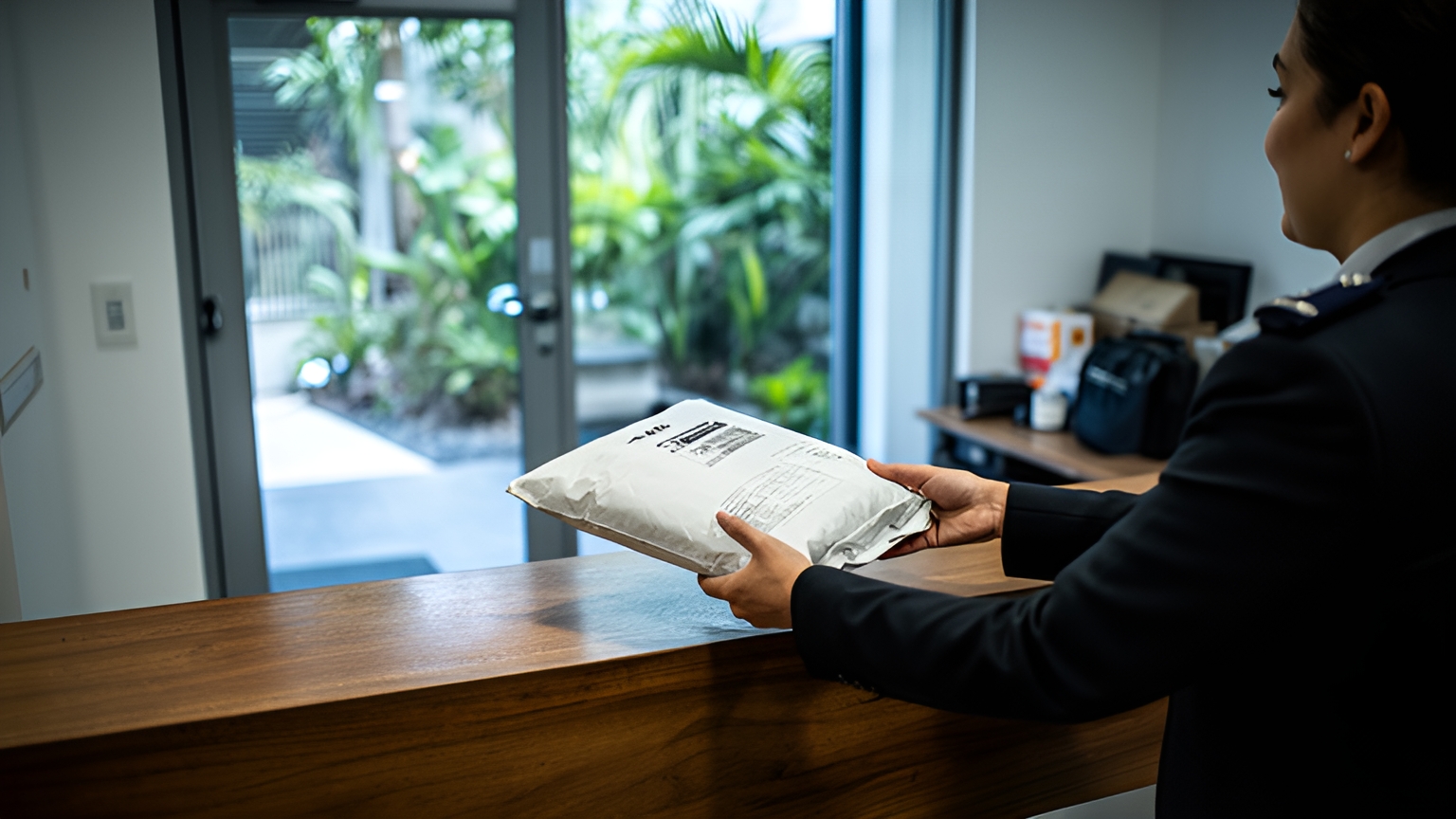
Writing safe-place prompts your customers can fill in clearly
An open box labelled with nothing but Delivery instructions tends to collect one-word answers a driver cannot act on. A short dropdown of named locations, plus a small free-text field for detail, gives you far better instructions.
Good safe-place wording is specific about the spot, the cover and the view from the street. Examples you can offer as options or show as hints:
- Behind the side gate, not on the front porch
- Under the covered back verandah, out of sight from the street
- With building reception on the ground floor
- In the building parcel room, ask the concierge for access
- With the neighbour in the unit next door, who knows it is coming
Pair the options with a few prompts that help customers think it through:
- Which side of the house, and which door?
- Is the spot covered from sun and rain?
- Can it be seen from the street?
- For apartments and offices: who receives parcels, and when is the desk staffed?
Decide what a blank field means before it happens. For items that need a signature anyway, a blank changes nothing. For low-risk items, send a short message asking for a safe place before you book the job, so the driver never has to guess.
Keep your wording consistent. Your terms and conditions should describe the same safe places your checkout offers, and the order confirmation should repeat the customer's instruction so they can correct a mistake early.
For every unattended drop, keep the order record, the customer's instruction and the delivery photo together. The guide to proof of delivery for business senders sets out what is worth keeping and for how long you might need it.
Planning business-to-business drops, reception hours and deadline documents
Sending to another business changes the question. Offices, clinics, shops and building sites rarely have a porch, and an empty foyer after closing time is not a safe place.
Before the first delivery to a new business address, collect:
- The receiving hours, including when reception closes for lunch or early on Fridays.
- A named person to receive the item, plus a backup.
- Access details: loading dock, goods lift, sign-in rules or a site office for building sites.
- Whether authority to leave is acceptable after close, and only if there is a locked parcel room, mailroom or site lock box.
For interstate business drops, agree the delivery window in the receiver's local time. Queensland, Western Australia and the Northern Territory do not use daylight saving, so the gap between, say, a Sydney office and a Brisbane reception changes across the year.
Deadline documents need the most care. Tenders, settlement papers and court filings should go to a named person who signs for them, never to a doormat or an unattended desk.
Chain of custody means a record of who held the item at each step, from pickup to the person who signs. A legal document delivery with chain of custody and signature on delivery gives you that record to keep on the file. Build in a buffer before any cut-off, too.
If the only person who can receive is available outside office hours, look at after-hours delivery options and confirm in writing who will be there to sign.
And if your practice or trade also runs its own vehicle for regular local drops, Locate2u is delivery management and route optimisation software for businesses that run their own drivers, which can help you plan the order of those stops.
Booking attended and signed deliveries through Zoom2u
When a parcel needs a person rather than a doorstep, you can book through Zoom2u, and an independent driver on the platform accepts the job.
For online stores, the e-commerce service includes customer-facing tracking and photo proof of delivery. For legal documents, it offers chain of custody, live tracking and signature on delivery, so you have a signed record of the handover.
Small businesses can choose same-day, 3-hour or interstate delivery job by job, with no minimum volumes, through Zoom2u's small business delivery options. That lets you match each order to the decision table above instead of using one setting for everything.
A Melbourne retailer with a chocolate order on a hot afternoon can book a 3-hour delivery for a time the buyer confirms they will be home. A Brisbane practice sending signed originals can arrange a handover with signature on delivery to the named recipient.
Frequently asked questions
Should authority to leave be switched on by default at checkout?
It works best as a per-product setting rather than one rule for the whole store. Leave it available for durable, low-value lines, switch it off for high-value, temperature-sensitive or personalised items, and tell the customer at checkout which items in their cart need someone home.
Can a customer change or withdraw authority to leave after placing an order?
Give customers a clear way to update their delivery instructions before the parcel leaves your premises, such as a reply to the order confirmation email or a phone number. Once the job is booked, pass any change on straight away so the driver has the current instruction.
Is authority to leave the same as a safe drop or a leave-at-door option?
The wording differs between checkouts and booking forms, but the idea is the same: the recipient agrees the parcel can be left without a signature. Pick one term, use it consistently across your checkout, emails and terms, and explain it in a single plain sentence so customers know what they are agreeing to.
Where can a business check consumer rights when an unattended parcel goes missing?
Consumer rights rules may apply, so keep the order record, delivery instructions and any photo proof together. Check the current guidance from the Australian Competition and Consumer Commission (ACCC) on not receiving products that were paid for before responding to the customer.
This article was drafted with AI assistance and checked by automated editorial, fact and legal review before publishing. Photographs are AI-generated.