Have you ever faced an urgent delivery deadline so tight that standard shipping simply won’t cut it?
Whether it’s a critical machine part needed across state lines or time-sensitive documents that must arrive today, urgent freight challenges can make or break your business operations.
The good news? You don’t need to book an entire B-double or semi-trailer for every rush delivery.
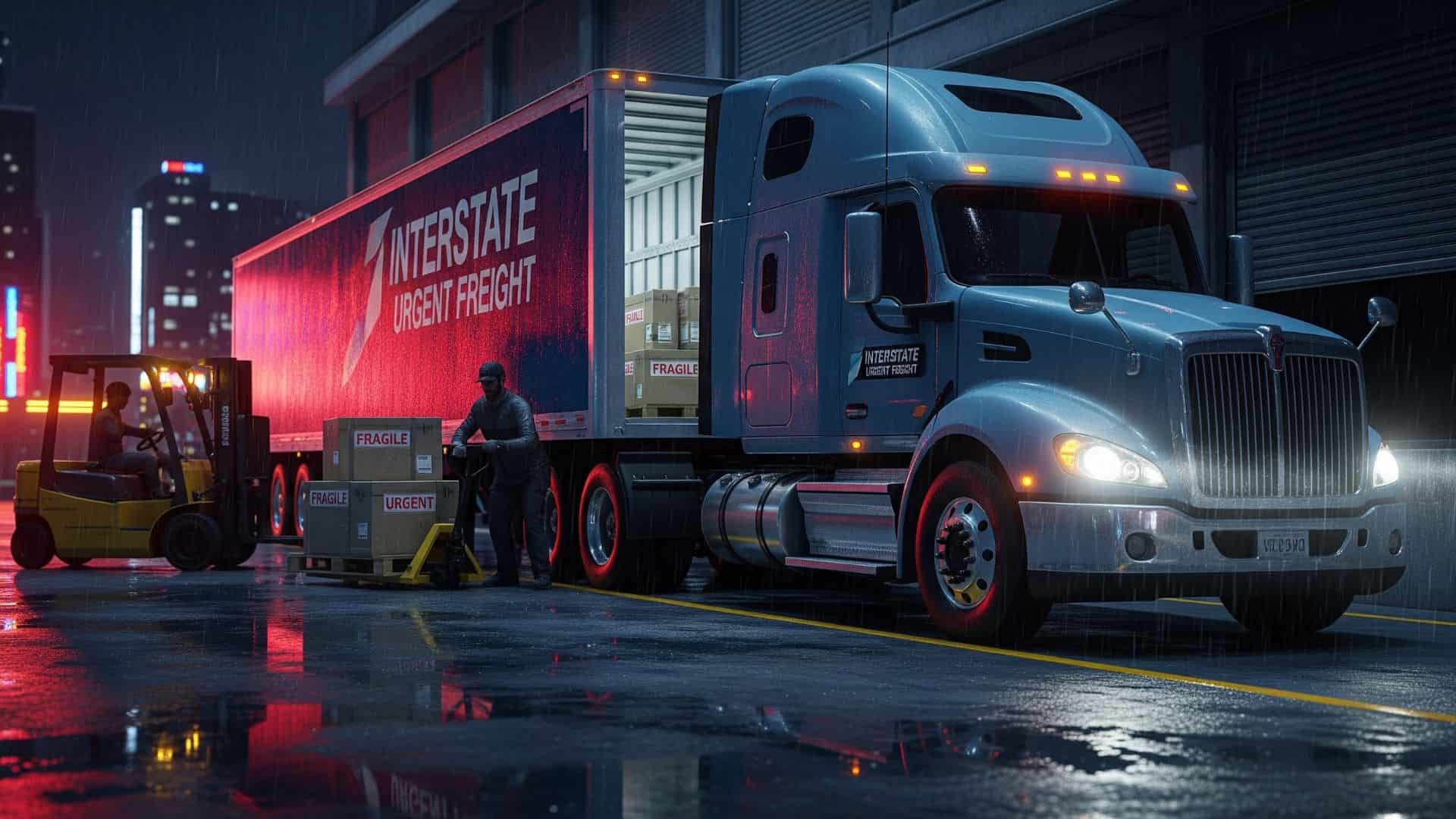
Interstate services for urgent, non-bulk freight offer a smarter, faster solution from getting your palletised loads, oversized packages, and time-critical shipments where they need to be, often within the same day.
In this guide, we’ll explore everything you need to know about interstate urgent freight services, from choosing the right vehicle to understanding how these solutions can transform your logistics strategy.
What Is Urgent, Non-Bulk Freight Delivery Services?
In 2026, the Australian logistics landscape has shifted toward “regional agility.” While bulk freight moves the nation’s coal and grain, non-bulk freight is what keeps the economy’s gears turning.
Common integrations include overnight delivery, interstate deliveries, and a vast network of delivery options.
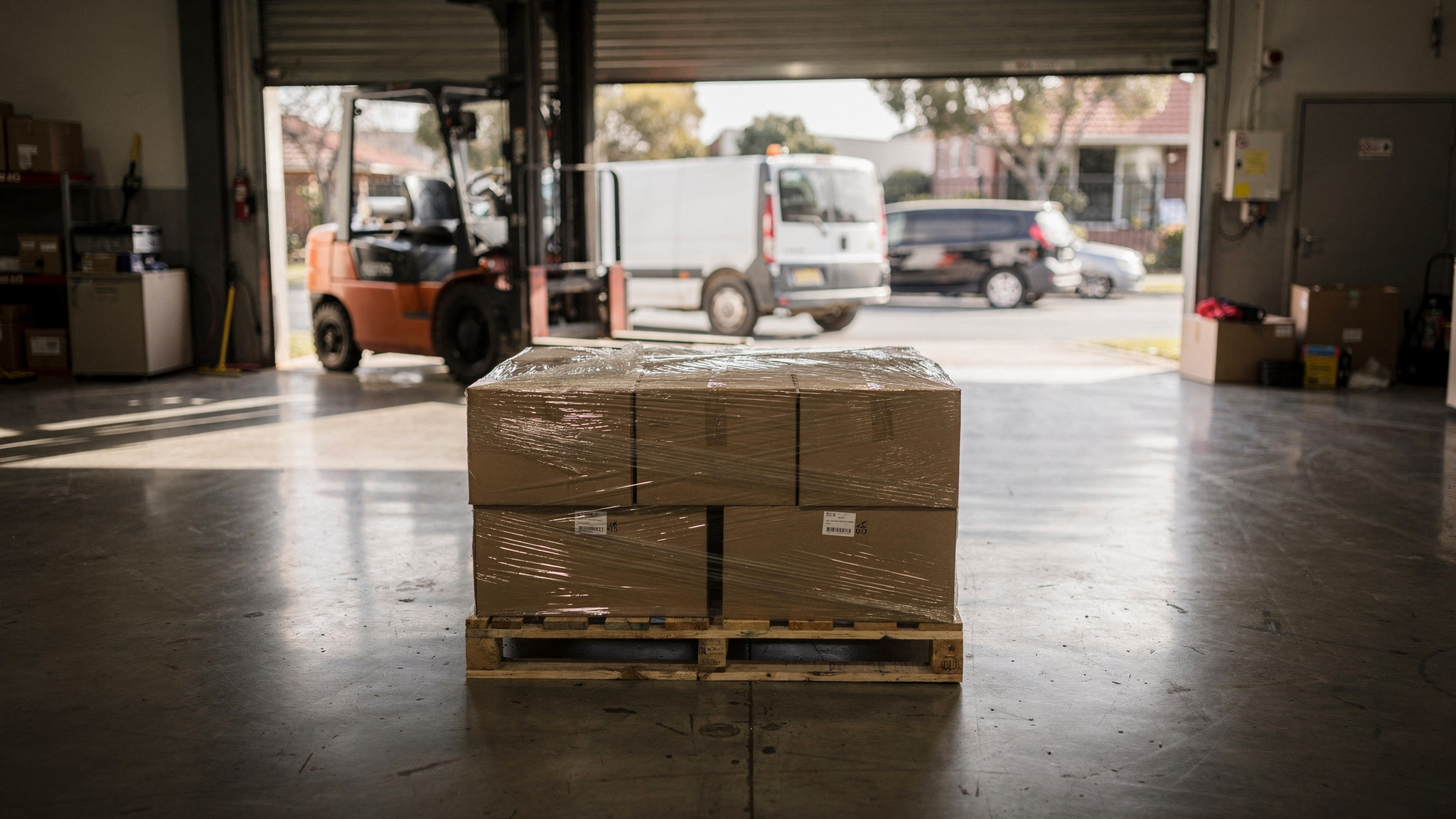
By definition, this refers to palletised shipments that don’t require a full semi-trailer but are too heavy for a standard courier and typically landing in that critical “middle ground” of 4.5 to 19 tonnes.
The real pressure point in 2026 is urgent non-bulk freight.
These are the high-stakes loads, think oversized parts, medical supplies, or multiple pallets of retail stock, where speed and reliability are more important than sheer volume.
Why Choose Interstate Courier Services for Urgent Non-Bulk?
When you’re facing a deadline, traditional “hub and spoke” shipping can be your worst enemy.
Urgent interstate services are built specifically for high-pressure scenarios, offering a few distinct advantages that we’re seeing lead the market this year.
Speed that matches your urgency
Same-day delivery has moved from a “nice-to-have” to a business baseline. In 2026, urgent interstate services operate on a true 24/7 cycle, with dispatch often happening within two hours of your call.
Because these services use direct routing, your cargo doesn’t sit in a sorting centre in Chullora or Truganina for twelve hours waiting for a consolidation window.
It stays on the road, moving directly toward the destination.
Right-sized solutions across the network
One of the smartest shifts in 2026 is “right-sizing.” There is no sense in paying for a 22-pallet semi-trailer to move three pallets of urgent parts.
Modern providers match your freight to the most efficient vehicle—whether that’s a high-roof van for a quick dash or a dedicated 8-tonne tautliner with a tailgate for heavy pallet work.
This keeps your costs predictable while ensuring the vehicle can actually navigate tight urban delivery zones or regional site entrances.
Real-time visibility and the “Anxiety Gap” of Freight Services
The days of “it should be there sometime Tuesday” are over. In 2026, if you can’t see your driver on a map, you don’t have control.
Urgent freight providers now offer live GPS tracking as a standard feature.
This transparency closes the “anxiety gap” for both you and your customer, allowing you to plan your labour and operations around a confirmed, dynamic arrival time rather than a vague window.
Drastically reduced handling risks
Every time a pallet is moved by a forklift in a warehouse, the risk of damage goes up.
Direct interstate freight is “one-touch” logistics: it’s loaded at your door and unloaded at the destination.
By eliminating the double-handling and warehouse transfers that define traditional freight, you’re protecting high-value or fragile items from the most common causes of insurance claims and delays.
Vehicle Options for Delivery Network Non-Bulk Urgent Loads
Choosing the right vehicle is crucial for balancing speed, cost, and cargo protection. Here’s how different options stack up for interstate urgent freight:
Cargo Vans and Sprinter Vans
Best for smaller to mid-sized urgent shipments, cargo vans handle loads up to several thousand pounds efficiently. They’re ideal for:
- Important documents and samples
- Small equipment and parts
- Medical supplies requiring quick transit
- E-commerce orders needing expedited delivery
Their compact size allows for faster navigation through urban areas and easier parking at pickup and delivery points.
Box Trucks with Lift Gates
For palletised freight weighing up to 4.5 tonnes, box trucks offer a practical middle ground.
The lift gate feature is particularly valuable when delivery locations lack loading docks, which is a common scenario we see for urgent drops at retail stores, job sites, or smaller facilities.
Hot Shot Trucks
When your freight doesn’t fit standard categories (perhaps it’s an unusual size or weight) then hot shot trucking fills the gap.
These services partner with vetted carriers to provide rapid ground transport for unconventional loads, often at a fraction of air freight costs.
16-metre semi-trailers (dry vans)
For larger non-bulk shipments nearing 19 tonnes, expedited dry van services provide full truckload capacity with fast, urgent delivery.
While this represents the upper end of non-bulk freight, these services still prioritize speed over standard FTL scheduling.
Real-World Applications: When Urgent Interstate Freight Saves the Day
In 2026, the value of interstate urgent freight isn’t just about moving a box from A to B; it’s about protecting the “velocity” of your business.
When you see these services in action, it’s clear they aren’t just a convenience but they are a critical insurance policy against the hidden costs of delay.
1) Manufacturing and production
A single missing component can turn a multimillion-dollar facility into an expensive parking lot.
In Australia, unplanned manufacturing downtime can cost mid-sized businesses up to $420 per minute.
Imagine a scenario where a critical sensor on a Melbourne production line fails and the only replacement is in a warehouse in Sydney.
Instead of waiting for a 48-hour standard freight cycle, a same-day palletised service puts that part on a dedicated vehicle or a “next-flight-out” service.
This action can get the line back up by 4:00 PM, saving you tens of thousands in lost output and avoiding the “SLA penalty” fees that usually hit when you miss customer delivery windows.
2) Healthcare and medical supplies
In the medical sector, “urgent” is an understatement. In 2026, the TGA has even tighter compliance principles for the supply of therapeutic goods, making the chain of custody and speed more vital than ever.
Consider a hospital in Brisbane that needs a specific, high-value surgical kit or a temperature-sensitive biologic that is only stocked in Perth.
Using a 24/7 urgent freight provider ensures the item is collected immediately, tracked via live GPS, and maintained in a climate-controlled environment interstate.
The result is that the kit arrives in hours, not days, which ensures patient safety and stays 100% compliant with the latest medical transport regulations.
3) Retail and e-commerce
Customer loyalty in 2026 is won or lost at the checkout. Data shows that 69% of Australian consumers will switch brands if a competitor offers faster or more convenient delivery options.
If a boutique electronics retailer in Adelaide sees a surge in orders for a new product but their local stock is depleted while their Sydney hub is overflowing, interstate urgent freight can bridge the gap.
Moving stock between hubs or fulfilling “VIP” orders directly from interstate warehouses to the customer’s door allows you to capture the sale instead of watching the customer bounce to a competitor.
Faster delivery can lift conversion rates by nearly 30% because “instant gratification” is now the baseline expectation.
4) Construction and job sites
Construction projects in 2026 face daily liquidated damages that can reach 1/1000th of the total project value per day.
This dedicated vehicle with lift-gate capability drives the materials directly to the site, bypassing traditional hubs that don’t have the gear to unload heavy freight.
This keeps the crew productive and avoids the massive “acceleration costs” required to catch up on a delayed schedule, ultimately keeping your project margin intact.
Choosing the Right Urgent Freight Provider
In 2026, the Australian freight market is tighter and more tech-driven than ever.
With carrier exits and regional capacity shifts, choosing a partner for interstate urgent freight is no longer just about the lowest rate but rather it’s about who can actually guarantee a slot and a driver when the pressure is on.
1. Coverage and the “2026 Capacity” Network
Don’t just ask if they “cover” Australia. You need to know if they have dedicated capacity on your specific lanes, especially for the tricky routes like Sydney to Perth or Melbourne to Adelaide.
In 2026, we’re seeing a shift toward “regionalization,” where some providers are much stronger in specific corridors.
Look for a partner that has established, “green-lit” relationships with vetted carriers to ensure your freight doesn’t get bumped for a larger contract during peak periods.
2. Technology: Visibility as a Non-Negotiable
In 2026, if you have to call a broker to find out where your truck is, you’re using the wrong provider. Real-time GPS tracking is now the industry baseline.
The best platforms go a step further with “Predictive ETAs” and AI-driven exception alerts, all meaning that if there’s a major accident on the Nullarbor or a flood in regional Queensland, you get a notification and a reroute plan before the delay even happens.
3. Vehicle Flexibility and “Right-Sizing”
Urgent freight isn’t always a full semi-trailer. Whether you need a 1-tonne van for a dash to a regional hub or a “Hot Shot” semi for an oversized mining part, your provider should offer a scalable fleet.
Matching the vehicle size exactly to the load isn’t just about saving on the “dead space” cost; in 2026, it’s also a key part of meeting corporate ESG and emissions targets by avoiding unnecessary fuel burn.
4. Response Time and the “2-Hour Dispatch”
When a production line is down or a medical facility is waiting on supplies, every minute is a dollar.
A professional 2026 provider should offer a “Rapid Dispatch” window and typically getting a vehicle on-site within two hours of your booking.
This requires a 24/7 on-call desk, not just an “after-hours” voicemail. If they can’t mobilize on a Sunday night, they aren’t a true urgent freight partner.
5. Transparency and the “All-In” Price
The 2026 market has seen a rise in complex surcharges, like fuel levies, congestion fees, and “remote zone” penalties. Seek out providers who offer clear, upfront pricing.
You want an “all-in” quote that accounts for the distance, weight, and urgency without those day-three surprise invoices.
Transparency is the only way to keep your project budgets predictable.
Cost Considerations for Interstate Urgent Freight
Expedited shipping costs more than standard services, but in 2026, the value of speed is often measured against the high cost of inaction.
Understanding the nuances of interstate urgent freight allows you to balance rapid delivery with bottom-line protection.
Factors Affecting Price
The cost of urgency is determined by five primary variables.
First, distance remains a major driver, as long-haul interstate routes naturally require more fuel and driver time than local metro deliveries.
Second, weight and dimensions dictate the equipment used; heavier loads or oversized shipments require larger vehicles, which increases the per-mile rate.
Third, speed requirements set the baseline, with same-day or “emergency” services commanding premium rates compared to standard 24-hour windows.
Fourth, the vehicle type, such as refrigerated units for perishables or flatbeds for industrial machinery, adds specialised equipment surcharges.
Finally, the time of booking is critical, as after-hours, weekend, or holiday pickups typically carry surcharges ranging from 15% to 30% over standard business-hour rates.
Ground vs. Air: Making the Right Choice
For many domestic interstate routes, expedited ground freight offers a strategic middle ground.
In 2026, “flying trucks” – dedicated team-driver units that run non-stop- can often match air freight transit times for distances under 1,000 miles.
Ground services typically cost 40–60% less than air alternatives while avoiding the complexities of airport handling fees and rigid flight schedules.
When your shipment can travel by road within the required timeframe, ground services provide superior value and greater flexibility for last-minute route adjustments.
The True Cost of Delays
When evaluating the premium for urgent freight, businesses must consider the alternative.
Production downtime, lost sales, and contract penalties often far exceed the cost of an expedited delivery.
Furthermore, roughly 65% of customers report they will abandon a provider after just two or three late deliveries.
In this context, fast delivery is a form of business insurance that protects your reputation and operational continuity rather than just a shipping expense.
Getting Started with Interstate Urgent Freight
To initiate an urgent shipment, start by preparing precise details including the pickup and delivery addresses, shipment weight, and required timeframe.
Mention any access limitations, such as the need for a liftgate or specialized loading docks.
Once you have this data, request and compare quotes from multiple providers to understand the current market “spot rates.”
Finally, confirm your booking and ensure you have access to real-time tracking tools.
Establishing a single point of contact for the duration of the transit ensures that any road or weather-related pivots are communicated instantly, keeping your schedule on track.
The Bottom Line: Speed Meets Efficiency
Interstate urgent freight services fill a critical gap in logistics—delivering time-sensitive, non-bulk shipments faster than standard options without the expense of air freight or full truckloads.
For businesses facing tight deadlines, these services aren’t a luxury; they’re a competitive necessity.
The key is finding a provider that combines speed with reliability, technology with transparency, and flexibility with fair pricing.
When your freight absolutely must arrive on time, the right partner makes all the difference.
Need a delivery solution that prioritises speed and reliability? Zoom2u offers same-day and express delivery services with real-time tracking, transparent pricing, and a network of trusted couriers ready to handle your urgent shipments.
Book your delivery today and experience the difference a dedicated courier platform makes.
For businesses managing their own delivery operations, Locate2u provides powerful route optimization and fleet management tools to streamline logistics and reduce costs. Discover how Locate2u can transform your delivery efficiency.