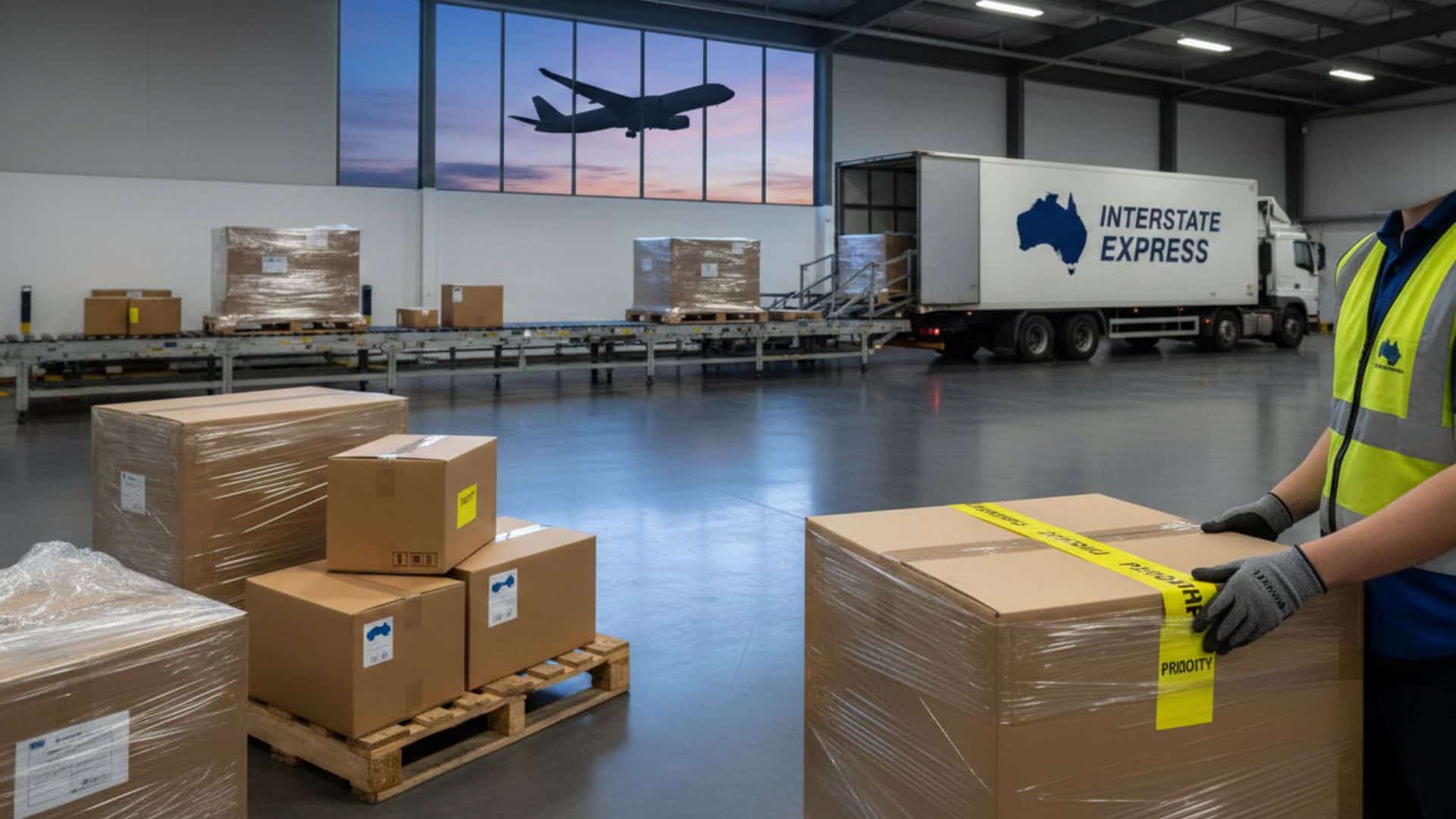

Interstate courier deliveries continues to aid and assist the Australian medical and hospital industry.
Consider this: a surgeon at a major Melbourne trauma centre is prepping for a complex procedure, and the one specialised device they need is not in stock anywhere in Victoria.
A pathology lab in Brisbane has test results that could change a patient’s treatment plan, but the samples need to physically travel interstate. The clock is ticking, and standard freight just will not cut it.
These are not theoretical situations. Melbourne hospitals regularly face scenarios where urgent interstate courier deliveries become the difference between rapid care and dangerous delays.
Understanding how these logistics work, and where they break down, matters for anyone involved in healthcare supply chains.
In 2026, the stakes are even higher as the medical sector has become one of the fastest-growing users of urgent logistics, driven by the rise of decentralised clinical trials and the need for validated cold-chain transport of biologics and cell therapies
Why Melbourne Hospitals Experience Unique Interstate Logistics Pressures
Victoria’s trauma network, established in 2000, is one of the most centralised in Australia.
Two adult and one paediatric Major Trauma Services (MTS) are based in Melbourne, supporting a tiered care system where patients within 30 minutes are triaged directly, while those further out are stabilised regionally before transfer.
This setup means Melbourne’s major hospitals serve as the gravitational centre for critical care across the state, and often beyond state lines.
Interstate logistics pressures typically arise from three areas:
- Medical emergencies: Pathology labs rushing samples between cities (for example, Brisbane to Sydney specialists) or regional hospitals needing devices flown in from Melbourne or vice versa.
- Supply chain gaps: Scheduled deliveries to hospitals, clinics, and pharmacies sometimes fall short, calling for rapid national distribution to fill the holes.
- Trauma retrieval coordination: Cross-border patient transfers require early liaison with MTS, and the supplies to support those patients often need to travel just as fast.
The challenge compounds when you consider that many medical supplies are temperature-sensitive.
A missed delivery window or an extra handling step while in transit can compromise the integrity of medications, biological samples, or donor materials entirely.
What Happens When Standard Courier Freight Isn’t Fast Enough?
Most interstate freight operates on predictable timelines. Standard road freight between major Australian cities takes two to five business days.
Express overnight services deliver by the next business day. For routine stock replenishment, these options function fine.
But hospitals don’t always operate on routine timelines. When a regional Victorian hospital needs an emergency surgical device that’s only available from an interstate supplier, or when a Melbourne clinic is waiting on pathology results from a Sydney lab that is able to alter a patient’s treatment within hours, the standard options simply aren’t built for the job.
This is where next-flight interstate courier services come in. These solutions bypass the sluggishness of conventional freight by delivering within hours rather than days.
In 2026, the process is streamlined to remove every possible friction point, beginning with an immediate pickup that typically occurs within one hour of your request.
Your goods do not sit in a sorting hub; they are rushed directly to the airport for fast-tracked handling, where they are checked in as little as 45 to 60 minutes before takeoff.
This ensures a same-day arrival at the destination city, with morning pickups often reaching their final recipient by that evening.
The table below puts the three main service tiers in context for Melbourne hospital use cases:
| Service Type | Typical Delivery Time | Melbourne Hospital Use Case |
| Standard Road Freight | 2–5 business days | Routine stock replenishment |
| Express Overnight | Next business day | Non-urgent interstate supplies |
| Next-Flight Interstate | Same day (hours) | Emergencies: samples, devices, medications |
Actual Cases: How Next Flight Courier Deliveries Play Out
To understand why these services matter, it helps to look at the kinds of situations Melbourne hospitals actually encounter.
Emergency Device Transfers
A regional Victorian hospital identifies a patient who needs a specialised implant or surgical instrument not stocked locally.
The nearest available unit is with a supplier in Sydney.
A next-flight courier picks it up, gets it on the next available flight, and delivers it to the Melbourne MTS facility the same day.
Without that speed, the procedure is delayed, the patient waits, and surgical teams are left idle.
Pathology and Lab Sample Transfers
Pathology samples and medications moving between Sydney, Brisbane, and Melbourne labs need to arrive same-day to avoid clinical delays.
Some tests can only be performed at specific laboratories, and the biological clock on those samples doesn’t pause for freight schedules.
Dedicated medical couriers handle these with tracking and proof of delivery at every stage, decreasing the risk of lost or compromised specimens.
Specialised Biological Transport
Some of the most sensitive courier work involves transporting gametes and embryos.
For example, a collection in Melbourne might need to reach a fertility clinic in Sydney and then continue to Brisbane or even internationally.
These shipments travel in cabin-accompanied cryoshippers, monitored by the courier throughout the journey. The tolerance for error is essentially zero.
The Patient Transport Connection
It’s worth noting that patient transport services like CareFlight handle interstate patient movements via air ambulance to Melbourne’s MTS.
But the cargo side, meaning the supplies, devices, and samples those patients need, often travels separately via dedicated courier services.
The two logistics streams need to work in parallel, and a failure on either side creates problems.
What Melbourne Hospitals Actually Gain from Urgent Courier Services
The benefits go beyond simply getting things there faster. For hospitals operating under the pressures of a centralised trauma system, reliable urgent courier services deliver several discernible outcomes:
- Reliable delivery windows: Hospitals can plan procedures and treatments around confirmed arrival times, minimising downtime for surgical teams and reducing patient wait times.
- Accountability through tracking: Live tracking from pickup to drop-off gives hospital supply chain teams visibility into where a shipment is at any moment. Proof of delivery closes the loop and creates an auditable record.
- Scalability: Whether it’s a one-off emergency or a recurring need during a supply disruption, these services flex to match demand without requiring hospitals to maintain excess inventory “just in case.”
- Better outcomes inside distributed systems: Australia’s geography means trauma and specialist care is spread across great distances. Reliable courier logistics help bridge those gaps, making sure that patients in regional areas connected to Melbourne’s MTS get the same quality of care.
Where Technology Fits Into Healthcare Courier Logistics
The operational backbone of urgent medical deliveries depends heavily on technology.
Without immediate tracking, route optimisation, and digital proof of delivery, the speed and accountability hospitals require would be impossible to maintain consistently.
Consider what’s involved in a same-day interstate medical delivery:
- A dispatcher needs to assign the nearest available driver within minutes of receiving the request.
- The driver needs optimised routing to reach the pickup point and then the airport as quickly as possible.
- The hospital receiving the delivery needs live updates so their team can prepare accordingly.
- A verified proof of delivery needs to be captured at the endpoint for compliance and chain-of-custody purposes.
Each of these steps relies on integrated logistics technology. GPS tracking, automated dispatch, digital proof of delivery, and real-time notifications aren’t nice-to-haves in this context. They’re the infrastructure that makes the whole operation trustworthy.
How Route Optimisation Supports Time-Critical Medical Deliveries
Route optimisation plays a particularly important role in the ground segments of these deliveries. The pickup leg and the final-mile delivery from the airport to the hospital are where minutes are most easily lost. Traffic, road closures, or a poorly planned route can turn a tight window into a missed one.
Software that actively adjusts routes depending on real-time conditions helps couriers stay on schedule. For medical deliveries, this reliability remainsn’t a commercial advantage. It’s a clinical necessity.
Frequently Asked Questions
Why do Melbourne hospitals need interstate courier services?
Melbourne’s centralised trauma network means its major hospitals serve as nodes for critical care across Victoria and sometimes interstate. When specialised supplies, devices, or lab samples aren’t available locally, hospitals rely on urgent interstate couriers to deliver them same-day.
How fast can a next-flight interstate courier deliver medical supplies?
Next-flight services typically pick up within one hour, fast-track through airport handling, and deliver to the destination city the same day. A morning pickup in Sydney, for instance, can reach a Melbourne hospital by the evening.
What types of medical items are transported by urgent interstate couriers?
Common items include pathology samples, medications, surgical devices, donor materials, and biological specimens such as gametes and embryos. Many of these require temperature-controlled or cabin-accompanied transport.
How does live tracking improve medical courier deliveries?
Real-time monitoring gives hospital logistics groups visibility into exactly where a shipment is at any point. Combined with digital proof of delivery, it creates accountability, aids compliance requirements, and allows clinical teams to prepare for incoming supplies with confidence.
Ready to Strengthen Your Delivery Operations?
Whether you’re managing medical logistics or any time-critical delivery operation, reliable tracking, route optimisation, and proof of delivery are non-negotiable.
Want a more hands-on review? Book a free operations consultation with our logistics experts and uncover quick wins that may transform your delivery performance.