To ship breast milk interstate, freeze it, pack the bags flat in an insulated bag with frozen ice bricks, label it and book a door-to-door next-flight delivery to someone who will be home. Allow a buffer for flight delays, keep it out of summer heat, and use any thawed milk within 24 hours without refreezing.
Working out how long expressed milk can travel: the fresh clock and the frozen clock
Expressed milk runs on one of two clocks, and the delivery plan has to fit inside whichever one applies. Work out which clock you are on before you decide how to send it.
The fresh clock. A factsheet from the Sydney Children's Hospitals Network says freshly expressed milk keeps "at room temperature for 6-8 hours, but should be refrigerated if possible". Queensland Health's expressing and storage guidance advises: "If milk will not be used within two days it should be frozen."
Fresh milk suits a short trip across town in a chilled insulated bag, going straight into the receiver's fridge. A journey with a drive to the airport, a flight and another drive at the other end is a different job, so freeze the milk first.
The frozen clock. Frozen milk has no fixed travel limit. Its deadline is the moment it stops being frozen, and the Australian Breastfeeding Association's storage guidance says that if frozen milk thaws during transport, use it within 24 hours and don't refreeze it.
The guidance cited here gives storage times for fridges and freezers, but not for a packed bag on the move. So timing is your best protection: the fewer hours between your freezer and theirs, the better.
- Expressed today, going across town today: keep it chilled with ice bricks and get it into the receiver's fridge on arrival.
- Going interstate, or not needed soon: freeze it, then send it frozen.
- Already frozen: keep it frozen from your freezer to theirs, and plan every step around that.
Packing frozen breast milk flat, labelled and surrounded by ice bricks
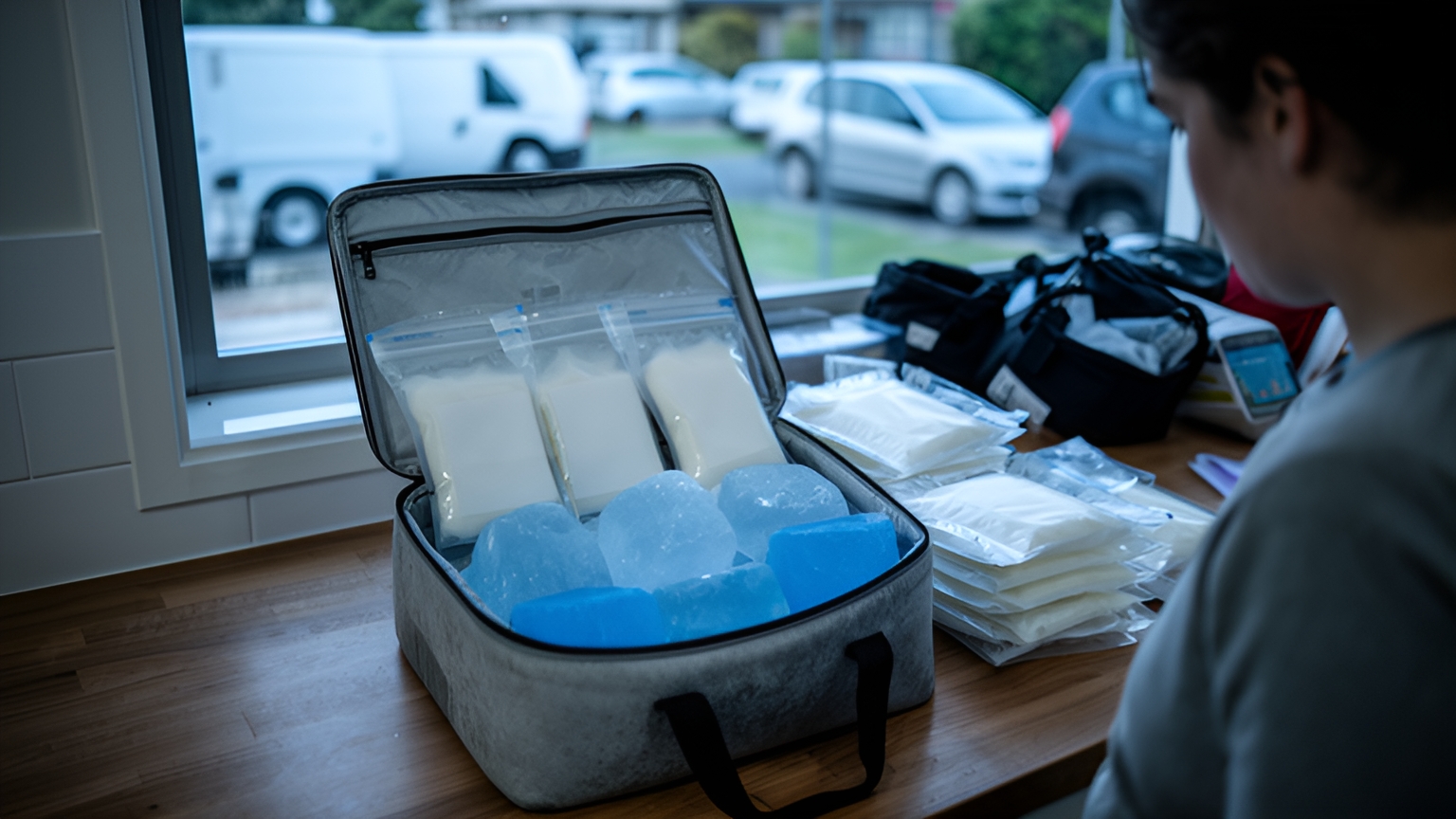
A well-packed bag gives the frozen clock its best chance. Flat bags stack tightly and leave little air space, and every gap filled is one less pocket of warm air.
- Freeze the milk flat. Lay storage bags flat on a tray in the freezer so they set as thin slabs that stack neatly. Write the date expressed on each bag before it goes in.
- Freeze plenty of ice bricks. Put them in the freezer the day before so they are frozen solid when you pack.
- Seal the stack in an outer bag. A sealable plastic bag around the milk keeps condensation from the bricks off the milk bags and their dates.
- Layer it. Ice bricks on the bottom of the insulated bag, the milk flat in the middle, more bricks on top and down the sides.
- Fill every gap. Use extra bricks or a folded tea towel so nothing shifts when the bag is carried.
- Pack last. Leave the milk and bricks in the freezer until the driver is on the way, then pack quickly and zip it shut.
Then label the outside of the insulated bag, in marker on a card or tape, so anyone who handles it knows what it is and what to do:
- Contents: frozen expressed breast milk
- The date or dates it was expressed
- The receiver's name, full address and mobile number
- A backup contact nearby, with their mobile number
- Handling: keep frozen, keep upright and out of the sun, hand to a person, do not leave unattended
Choose frozen ice bricks over loose ice. Loose ice melts into water inside the bag, while bricks stay sealed and keep the milk bags dry.
Keeping milk out of the heat on summer pickup and drop-off days
Heat is the biggest threat to the frozen clock, and Australian summers can be fierce. The Bureau of Meteorology reports that summer 2024-25 was the second-warmest on record, at 1.90 °C above average.
Most of the heat risk you can control sits on the ground, in the minutes a bag waits somewhere warm:
- the boot of a car parked at a train station while you run an errand
- a front porch where nobody answers the door
- the back seat on a long pickup run, with the sun on the window
- a front step while you wait for the driver to arrive
Each of these has a simple fix:
- Keep the packed bag indoors in the coolest room until the driver is at the door, then hand it over in person.
- On hot days, book the pickup for the morning and avoid the middle of the afternoon where you can.
- Check the Bureau of Meteorology forecast for both cities the day before, and move the handover to a cooler day if your timing is flexible.
- Ask the receiver to be home and waiting, so the bag goes from the door to the freezer without sitting outside.
If you drive the bag somewhere yourself first, keep it in the air-conditioned cabin, not the boot.
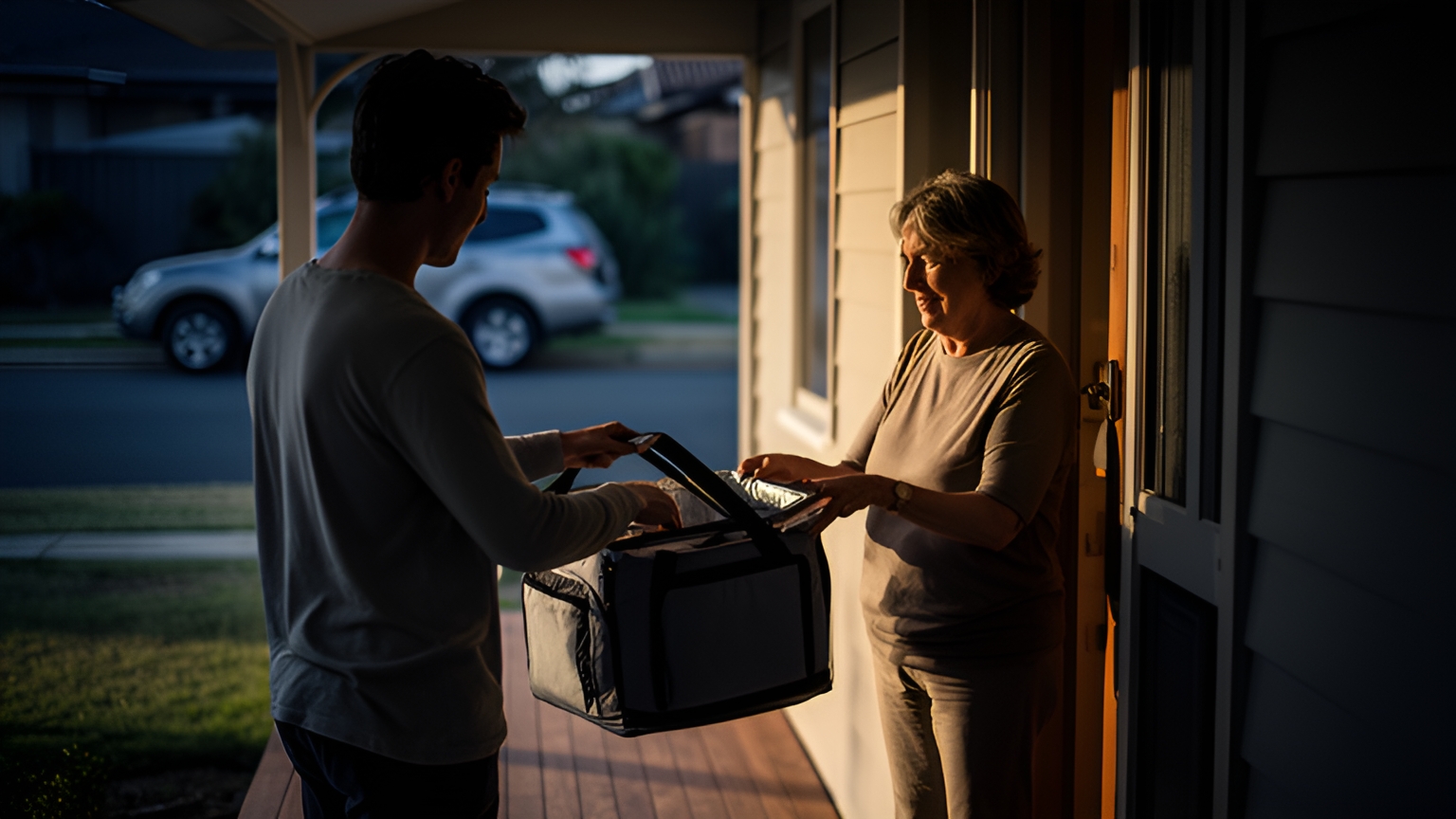
Choosing between a direct across-town trip and a next-flight interstate delivery
The right option depends on distance and how many times the bag changes hands. Fewer handovers, and no time in a depot (a sorting warehouse where parcels wait for the next leg), mean fewer chances for the bag to sit somewhere warm.
Say frozen bags were left at the grandparents' place in Geelong and are needed back in Melbourne before the next feed, or a Brisbane parent is sending milk to a carer on the Gold Coast. A direct same-day delivery across town or to a nearby city keeps the bag with one driver from your door to theirs.
If tonight's feed depends on milk sitting in someone else's freezer, book it as an urgent personal delivery as soon as you know, so the bags reach the receiver's freezer with time to spare.
Once the bag needs to cross state lines, a flight is the way to keep the door-to-door time short.
| Your situation | Option that fits | Why it fits |
|---|---|---|
| Frozen bags at a grandparent's home in Geelong, needed in Melbourne tonight | Direct same-day trip by road | One driver, one vehicle, straight to the receiver's freezer |
| Freshly expressed milk going from Brisbane to a carer on the Gold Coast | Direct same-day trip by road, chilled with ice bricks | No waiting between legs, and it goes straight into the carer's fridge |
| Frozen milk from a Sydney freezer to a parent working away in Perth | Next-flight interstate delivery | A flight keeps the trip far shorter than a road journey across the country |
| A frozen supply going to family in Hobart, and you want one person holding it the whole way | On-board courier | A courier carries the bag with them on the flight and hands it to the receiver |
Building a buffer into a next-flight handover between capitals
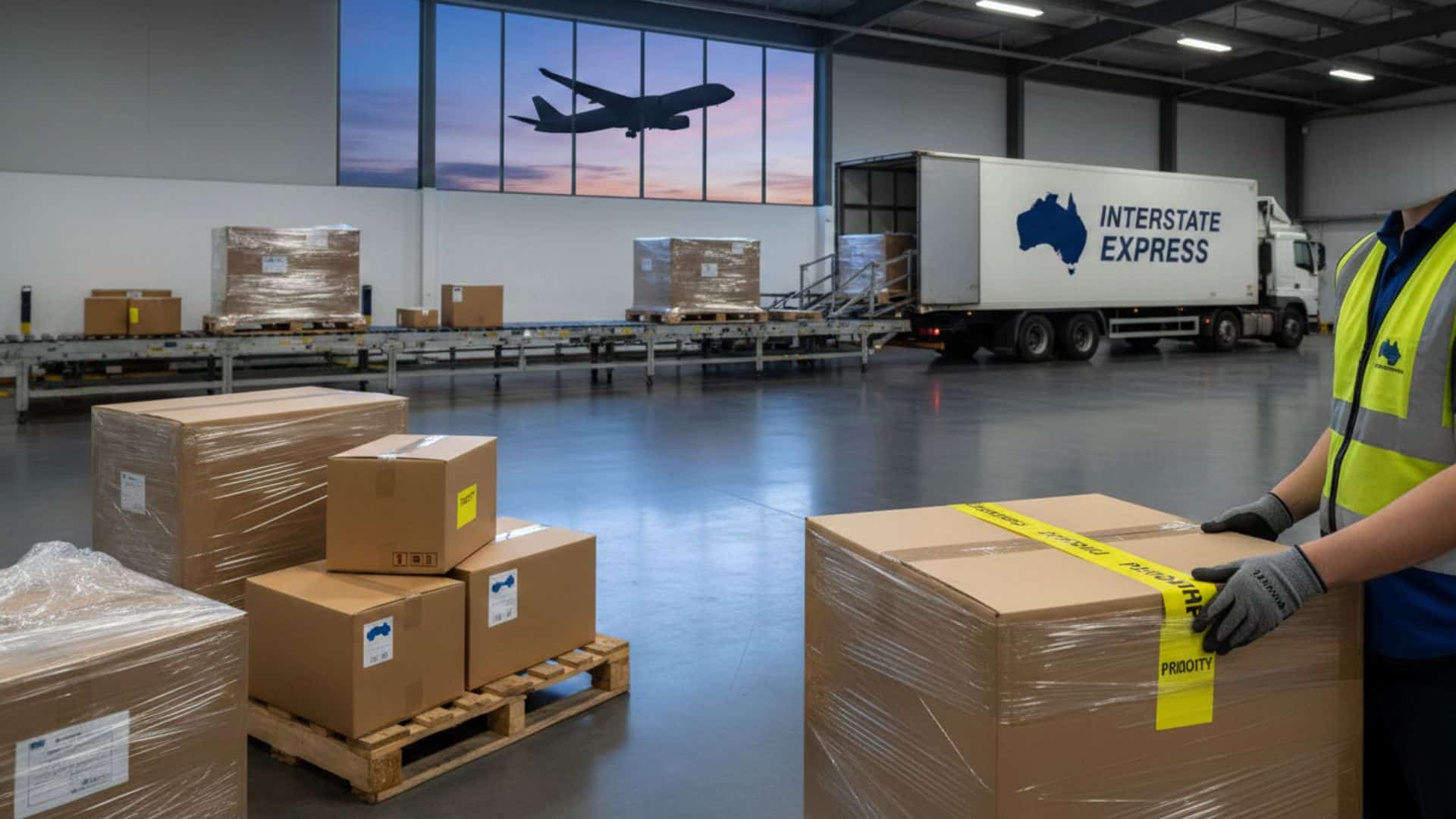
In a next-flight delivery, a driver collects the bag from your door and takes it to the airport. It travels as freight, meaning cargo carried in the aircraft hold rather than by a passenger, and a driver at the other end brings it to the receiver's door.
Flights do not always run to the minute. The Bureau of Infrastructure and Transport Research Economics puts the long-term average for on-time domestic arrivals across all routes at 80.5%.
Cancellations are less common but do happen: BITRE's monthly summary gives a long-term average cancellation rate of 2.2%.
So plan the handover with room to absorb a late or cancelled flight:
- Ask about the cut-off. That is the latest time a parcel can be handed over and still make a particular flight. Book early in the day, so later flights remain options if the first is delayed or cancelled.
- Don't time it to the feed. Plan for the milk to arrive well before it is needed, and keep a backup feeding plan at the receiving end in case it lands later than hoped.
- Keep the receiver's window wide. Ask them to stay home for the whole afternoon or evening, not a single hour.
- Agree every time in the receiver's local time. Queensland, Western Australia and the Northern Territory do not use daylight saving, while New South Wales, Victoria, the ACT, Tasmania and South Australia do, so the gap between Sydney and Brisbane changes across the year. Perth runs behind every other capital all year.
Before you book, read how a same-day interstate delivery works from pickup to drop-off, so you know where each handover happens and can build your buffer around it.
Getting the receiver ready and checking the bags at the door
The delivery ends at the receiver's freezer, not the front door. A little preparation at that end protects all the work that went into packing.
- Clear enough freezer space for the whole stack before the bag arrives.
- Confirm who will be home, and that their mobile is on and charged.
- Agree a backup person nearby, such as a neighbour or relative, whose name is already on the label.
- Share the booking details and expected arrival time, in the receiver's local time.
When you book, add a short note for the driver: keep the bag upright and out of the sun, hand it to a person, and call the receiver or the backup contact rather than leaving it unattended.
When the bag arrives, the receiver can work through four quick steps:
- Take the insulated bag inside and open it straight away, away from the warm doorstep.
- Check each milk bag. Any bag still frozen solid goes straight into the freezer.
- Any bag that has thawed goes in the fridge. Use it within 24 hours and do not refreeze it, following the same storage guidance.
- Text the sender to say the bags have arrived and how they look, so the next delivery can be adjusted if needed.
If anyone is unsure whether a bag is still fine to use, ask a child health nurse, midwife or GP before feeding it.
Booking a next-flight or on-board courier for breast milk through Zoom2u
Once the milk is frozen, packed and labelled, and the receiver is ready, the remaining job is getting the bag onto a flight with as little waiting as possible.
For an interstate handover, Next Flight Courier through Zoom2u is built to get the packed bag onto the next available commercial flight once an independent driver accepts the job and collects it from your door. Same-day delivery is possible depending on cut-off times and flight availability, so booking early in the day gives you the most room.
The booking needs no shipping label, but keep your own handwritten label on the insulated bag so the receiver and anyone carrying it know what is inside and how to handle it.
If you would rather the bag stays with one person the whole way, On-Board Courier has a dedicated courier fly with it as cabin baggage, carried in the passenger cabin rather than the hold, and hand-deliver it to the receiver.
Either way, have the receiver's local time, the backup contact and your handling note ready when you book through Zoom2u, and pass the note on to the driver at pickup.
Frequently asked questions
Can I pack breast milk with dry ice for a flight?
Dry ice may be covered by dangerous goods rules for air transport, and the Civil Aviation Safety Authority (CASA) administers those rules, as the Department of Home Affairs notes. Check the current requirements with CASA and tell whoever handles the booking before you pack it.
Can I send breast milk to a hospital ward or childcare centre in another state?
Call the ward or centre first and ask when someone can receive it, whether there is freezer space ready and whether they need their own label details. Ask for the delivery to go to a named person during staffed hours, and put that name and a mobile number on the bag.
Can breast milk be delivered on a weekend or public holiday?
It can be, as long as someone is home to take it straight to the freezer and flights are running on that route. Public holidays differ between states, so check the holiday calendar in both the sending and receiving state, agree the delivery time in the receiver's local time, and look at how weekend and public holiday deliveries work before you book.
Can I send breast milk overseas from Australia?
Sending milk overseas involves separate rules that may apply at both ends, so start with the Australian Border Force before planning any international shipment, and check the destination country's requirements as well.
This article was drafted with AI assistance and checked by automated editorial, fact and legal review before publishing. Photographs are AI-generated.