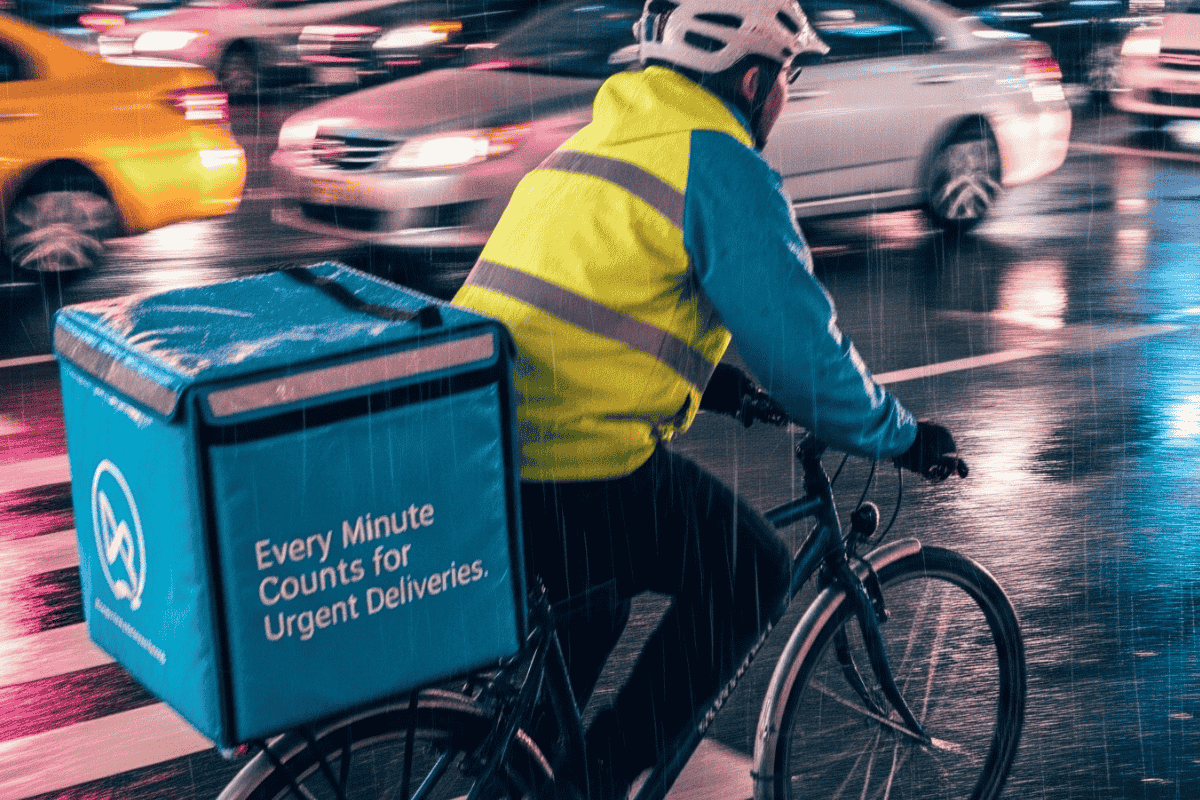
Managing urgent deliveries with tight budgets and tighter deadlines isn’t easy. Production lines can’t pause. Patients can’t wait. And online shoppers expect “now.”
When every minute counts, expedited shipping (backed by real-time tracking, dedicated vehicles, and precise operational control) helps you keep every promise.
Urgent Deliveries: What Is Expedited Shipping?
Expedited shipping is a premium, fast-moving service that gets critical freight from pickup to delivery without unnecessary stops or warehouse delays.
It relies on dedicated vehicles, priority handling, and live visibility to compress transit time and reduce the risk of damage or missed deadlines.
What Makes a Reliable Expedited Service
A strong expedited delivery network depends on a few core factors working together. Dedicated vehicles and drivers mean your freight doesn’t sit around waiting for other loads to fill a truck.
Priority handling speeds up every stage, from loading to unloading. And real-time GPS tracking keeps dispatchers and customers in sync from start to finish.
Some shipments also rely on mixed transport, usually a combination of road, air, or charter services depending on distance, urgency, and cost.
For critical freight, custom delivery plans balance speed, security, and budget with defined delivery windows and clear proof of delivery.
When to Use Expedited Shipping
Expedited services are designed for shipments where delays aren’t an option. These are the use cases where speed protects both revenue and trust.
Perishable and temperature-sensitive goods like fresh food, pharmaceuticals, and biologics often rely on expedited networks to stay within strict handling times.

Manufacturers use it for urgent production parts to prevent costly downtime. Hospitals and clinics depend on it for time-critical medical supplies.
And in retail, it supports VIP orders, product launches, and urgent store replenishment when stockouts aren’t acceptable.
How Urgent Deliveries Work
Expedited ground runs 24/7 using dedicated trucks and trained drivers who drive direct routes, minimize dwell time, and avoid unnecessary cross-docks.
With the right setup, dispatchers can monitor every vehicle, track ETAs in real time, and re-route shipments around traffic or incidents before delays happen.
The result is faster transit, better communication, and fewer surprises.
Technology does the heavy lifting here: route optimization software plans direct paths, while live GPS feeds give customers accurate ETAs and instant updates.
The Business Case: Speed That Protects Revenue
Many business make the mistake of thinking speed is just about ticking boxes, but it’s not. It protects your bottom line. With expedited delivery, you keep your production lines moving, which prevents missed deadlines. And all of that preserves customer confidence.
Fewer handling points reduce damage and returns. Real-time ETAs improve transparency. On-time success rates go up, while customer complaints and penalties go down.
When logistics teams have live visibility, they can recover from disruptions quickly, protecting both the schedule and the brand reputation.
A 30-Day Plan
Week 1: Define What’s “Urgent”
Identify which orders truly need priority handling, such as critical components, medical deliveries, or high-value freight.
Tag them clearly in your transport or order system so they can be routed differently.
Week 2: Build Your Fast Lane
Reserve capacity with dedicated vehicles and set up clear internal processes for urgent loads. Enable live tracking and proof of delivery collection before launch.
Week 3: Launch and Monitor
Run pilot dispatches using your new workflow. This is where you monitor estimated times of arrival (ETAs), as well as on-time delivery rate, and any exceptions.
You should also collect driver feedback and customer input to refine.
Week 4: Optimize and Scale
During week 4, you review your results. See if you need to adjust vehicle capacity or driver coverage.
You might even need to change routes based on demand patterns. Update SOPs and customer messaging for smoother scaling.
Tech That Supports Urgent Deliveries
Reliable expedited logistics depends on real-time data and automation. Route optimization software builds efficient direct paths based on time windows, driver shifts, and vehicle requirements.
Live GPS tracking gives visibility to both dispatchers and customers. A driver app enables barcode scanning, task updates, and instant proof of delivery via photo or signature.
Automated notifications and ETA alerts keep everyone informed, reducing calls and uncertainty.
Exception management tools flag delays, access issues, or temperature deviations so teams can respond before they escalate.
How Locate2u Helps with Urgent Deliveries
Locate2u combines speed and control in one platform.
- Route Optimization: Build time-definite routes that prioritize urgent stops.
- Real-Time Tracking: Share live ETAs with customers and reroute drivers when needed.
- Driver App: Give drivers clear workflows, task lists, and proof-of-delivery capture tools.
- Proof of Delivery: Instantly confirm every completed job with digital signatures or photos.
Common Pitfalls and How to Avoid Them
The biggest mistake businesses make is using standard freight networks for urgent loads. Shared linehaul systems can’t guarantee speed or direct routing.
Without live visibility, even small delays turn into big problems. Manual dispatching often can’t react fast enough when routes change.
And missing delivery notes or site instructions can cause re-deliveries that waste time and money.
The fix is simple: use dedicated vehicles, enable tracking, capture proof of delivery, and review post-delivery data regularly to tighten performance.
Urgent Deliveries: FAQs
What’s the difference between expedited and standard shipping?
Expedited shipping prioritizes your load with direct routing and dedicated capacity. Standard freight involves shared space and longer transit times.
Ground expedite vs air freight — which is faster?
Ground expedite is ideal for regional or same-country moves. Air freight is best for long-distance or cross-border deliveries with tight deadlines.
What is proof of delivery (POD)?
POD confirms the delivery was completed, using signatures, photos, or barcode scans. It reduces disputes and speeds invoicing.
How fast can expedited deliveries be?
Same-city moves can arrive within hours. Interstate jobs may use overnight or next-flight options.
How do I control costs?
Right-size your transport mode, group urgent shipments where possible, and reduce failed deliveries with accurate ETAs and communication.
Bring Control and Speed to Urgent Deliveries
With the right tools (like dedicated vehicles, live tracking, and smart routing) you can meet tight deadlines without losing control.
Try Zoom2u today. And if you manage your own fleet, you can still benefit from the software Zoom2u is built on, with Locate2u.
Locate2u brings all of this together in one platform, helping teams move faster and deliver with confidence.